Asphalt Shingle Types Compared: 3-Tab, Architectural, and Luxury
If you’re reroofing or building new, the largest line item in the quote is usually the shingle itself — and not all asphalt shingles are created equal. This asphalt shingle types compared guide breaks down the three main categories homeowners actually choose between: 3-tab, architectural, and luxury (designer) shingles, with real installed prices, lifespans, warranty terms, and a clear sense of which one earns its keep on which house.
Asphalt remains the dominant roofing material in North America for a simple reason: it covers about 80% of US homes. It’s cheaper than metal or tile, installs fast, and modern versions look far better than the flat, faded strips you might picture. The catch is that the cheap tier and the premium tier look so different in cost per square foot that a homeowner can pay $7,000 or $35,000 for the same roof shape — that’s the spread this guide exists to explain.
The Three Main Types of Asphalt Shingles
Every asphalt shingle starts from the same core: a fiberglass mat saturated with asphalt and coated with ceramic granules that block UV rays and add color. What separates the tiers is thickness, shape, and how the shingle is layered.
- 3-tab shingles are flat, single-layer strips with three visible cutouts per piece. They produce a uniform, repetitive grid look.
- Architectural (dimensional or laminate) shingles bond two or more layers into a thicker, staggered profile that mimics wood shake or slate.
- Luxury (designer or premium) shingles are extra-heavy laminates shaped and colored to convincingly imitate slate, cedar shake, or tile.
The further up that list you go, the more you pay up front — and in most cases, the more years, wind resistance, and resale curb appeal you get back.
3-Tab Shingles: The Budget Baseline
Three-tab shingles are the entry point. They cost the least because they use the least material — a single layer roughly 0.2 inches thick — and because they’re the fastest to install. For decades they were the default on tract houses and rentals, which is exactly why they still carry a dated, “starter home” reputation today.
Installed, 3-tab typically runs $1.50 to $3.50 per square foot, or roughly $7,000 to $11,000 for an average single-story roof. Materials run about $25 to $35 per bundle. The trade-off is durability: most 3-tab shingles carry a 20- to 25-year warranty and a wind rating around 60 mph, and in storm-prone regions they can fail well before that. If you live where hail, high wind, or ice dams are common, the savings usually evaporate within a decade.
3-tab still makes sense in narrow spots: large rental portfolios, outbuildings and sheds, or a starter home you’ll sell within five years. For a primary residence you plan to keep, it’s usually worth stepping up.
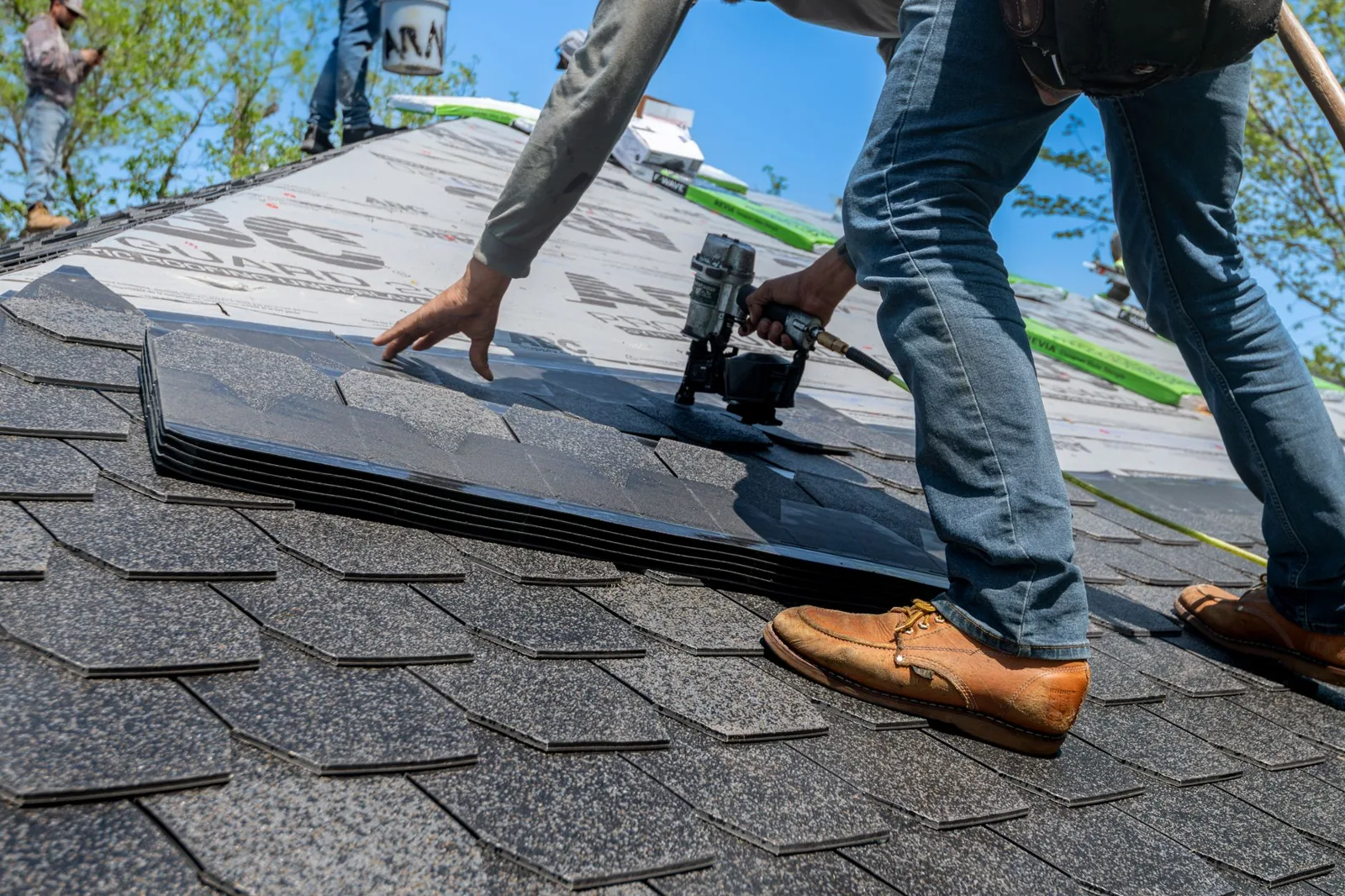
Photo by Ryan Stephens via Pexels
Architectural Shingles: The Most Popular Choice
Architectural shingles — also called dimensional or laminate shingles — are now the default that most roofers quote, and for good reason. Built from two or more fused layers, they read as thicker, shadowed, and more textured, which hides minor roof-plane waviness and gives the house more visual weight.
Expect to pay $4.50 to $7.00 per square foot installed, or $10,000 to $16,000 for an average roof — about 30 to 40% more than 3-tab. For that premium you get a 30-year-to-lifetime limited warranty, wind ratings from 110 to 130 mph, and algae-resistant granules on most lines. Popular products here include the GAF Timberline, Owens Corning Duration, and CertainTeed Landmark families, which together cover a huge share of the market.
The durability gap is real. Where a 3-tab roof in a hot climate might look tired at 15 years, a quality architectural roof routinely lasts 25 to 40 years with basic maintenance. Because it’s the mainstream product, it also has the widest color and manufacturer selection, so you’re rarely waiting on a special order.
Luxury Shingles: Maximum Curb Appeal
Luxury shingles — sometimes called designer or premium shingles — are the top shelf. They’re thick, multi-layer products engineered to mimic slate, hand-split cedar shake, or clay tile without the weight or cost of the real thing. CertainTeed’s Grand Manor and Carriage House, Owens Corning’s Berkshire, and Malarkey’s Legacy lines are among the best known.
Pricing starts around $8.00 per square foot and climbs past $15.00, putting a full roof at $16,000 to $35,000 or more. The payoff is longevity and presence: 50-year or lifetime warranties, wind ratings above 130 mph, and a three-dimensional profile that noticeably changes how the house photographs. On a historic or high-end home — or one where you’re competing with neighbors on resale staging — the cost can be justified. On a modest ranch in the suburbs, it’s often money that buyers won’t pay you back for.
One practical note: luxury shingles are heavy, sometimes 350 to 450+ pounds per square. Your decking and framing have to carry that, so a structural check is worth it before you commit.
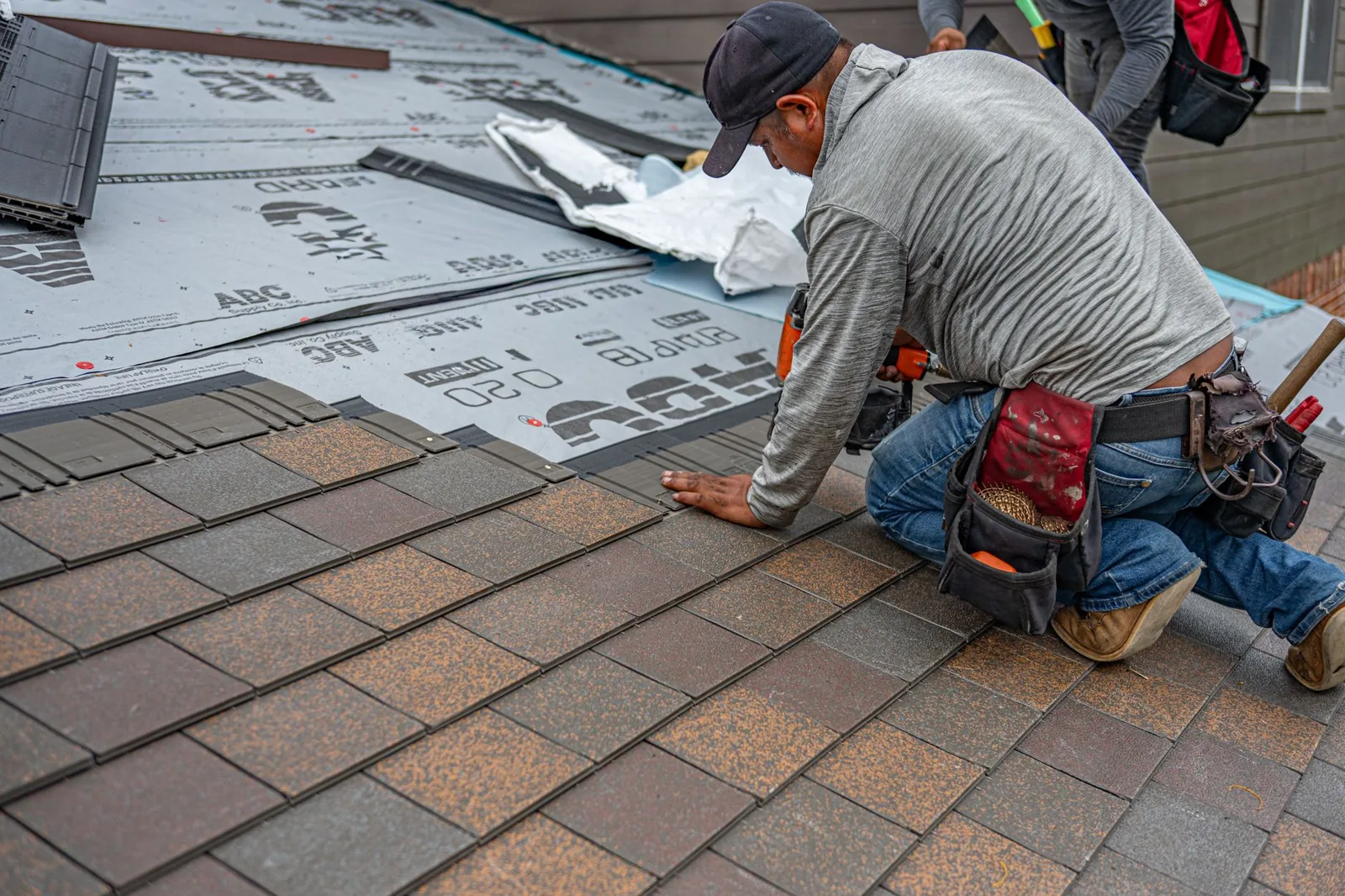
Photo by Ryan Stephens via Pexels
Cost Comparison: What Each Type Actually Costs
The table below summarizes the three tiers side by side. Figures are national mid-2025 averages for a standard single-story roof of roughly 1,800 to 2,200 square feet; your local labor market will shift them.
| Feature | 3-Tab | Architectural | Luxury (Designer) |
|---|---|---|---|
| Installed cost per sq ft | $1.50–$3.50 | $4.50–$7.00 | $8.00–$15.00+ |
| Typical total roof cost | $7,000–$11,000 | $10,000–$16,000 | $16,000–$35,000+ |
| Material thickness | Single layer | 2+ layers | Multi-layer, heavy |
| Expected lifespan | 15–25 years | 25–40 years | 30–50 years |
| Warranty | 20–25 yr | 30 yr–lifetime | 50 yr–lifetime |
| Wind rating | ~60 mph | 110–130 mph | 130+ mph |
| Weight per square | ~200 lb | 220–350 lb | 350–450+ lb |
| Best for | Rentals, sheds, short-term | Primary homes (default) | High-end, historic, resale |
Lifespan, Warranty, and What Actually Reduces a Roof’s Life
The manufacturer’s number on the label is a ceiling, not a promise. Three real-world factors decide whether a shingle reaches its full lifespan:
- Climate. Intense UV in the Sun Belt bakes granules off the mat; freeze-thaw cycles in the North stress the sealant strips. Both shorten any shingle.
- Ventilation. An overheated attic can cook shingles from below and void the warranty. Proper intake and exhaust ventilation matters as much as the shingle you pick.
- Installation quality. Nail placement and count drive wind performance. A premium shingle nailed wrong won’t outlast a cheap one nailed right.
Warranties are worth the fine print. “Lifetime” on an architectural shingle usually means the non-prorated coverage runs only 10 to 20 years, after which coverage shrinks. Many manufacturers also require you to use their ridge, starter, and leak-barrier products to keep the full warranty valid. For more on how long a roof should realistically last where you live, see our guide on how long a roof lasts.
How to Choose the Right Shingle for Your Home
Start with how long you’ll own the house, then budget, then climate, in that order.
- Own it five years or fewer? 3-tab or entry-level architectural is fine; don’t over-invest in a roof you won’t enjoy.
- Planning to stay 10+ years? Architectural is the value sweet spot — real durability improvement for a modest premium.
- High-value or historic home? Luxury shingles make sense, especially if slate or shake is the look the house demands.
- Storm or wildfire zone? Prioritize a Class 4 impact-rated or high wind-rated architectural shingle, which can also trim your insurance premium.
Don’t make the decision in a vacuum. If the budget conversation is part of a larger project, our breakdown of roof replacement cost walks through labor, tear-off, and underlayment line by line. And if you’re weighing shingles against a standing-seam metal roof, the metal roof vs shingles cost article lays out the 40-year math side by side.
Frequently Asked Questions
What are the three main types of asphalt shingles?
Three-tab, architectural (dimensional/laminate), and luxury (designer/premium). They differ in thickness, layered construction, lifespan, wind rating, and price, ascending roughly in that order.
How much more do architectural shingles cost than 3-tab?
Architectural shingles typically run 30 to 40% more — roughly $4.50 to $7.00 per square foot installed versus $1.50 to $3.50 for 3-tab. On an average roof that’s about a $3,000 to $5,000 difference.
Which asphalt shingle lasts the longest?
Luxury designer shingles generally last longest, with 30- to 50-year expected lifespans and 50-year-or-lifetime warranties, followed by architectural shingles at 25 to 40 years. Three-tab shingles usually top out around 25 years.
Are 3-tab shingles being discontinued?
Some manufacturers are phasing out certain 3-tab lines as architectural shingles take over the market, but budget 3-tab products are still widely sold and installed, especially for rentals and outbuildings.
Does a heavier shingle protect better against wind and hail?
Generally yes. Architectural and luxury shingles carry higher wind ratings (110 to 130+ mph) and can be had in Class 4 impact-rated versions, whereas most 3-tab shingles top out around 60 mph wind rating.
The Bottom Line
For most homeowners, the math is simple: architectural shingles are the default answer — the durability and curb-appeal gains outweigh a 30% premium over 3-tab, and the step up to luxury is only worth it on high-end or historic homes. Three-tab earns its keep purely in cheap, short-hold situations, and luxury shingles are a curb-appeal play, not a practical necessity.
Whatever tier you lean toward, get at least three local quotes, confirm the manufacturer’s full-system warranty requirements, and make sure ventilation is part of the scope. A shingle is only as good as the deck and attic working underneath it. For two dependable starting points on installation and buying guidance, This Old House and Family Handyman both keep current guides that hold up against sales pressure.