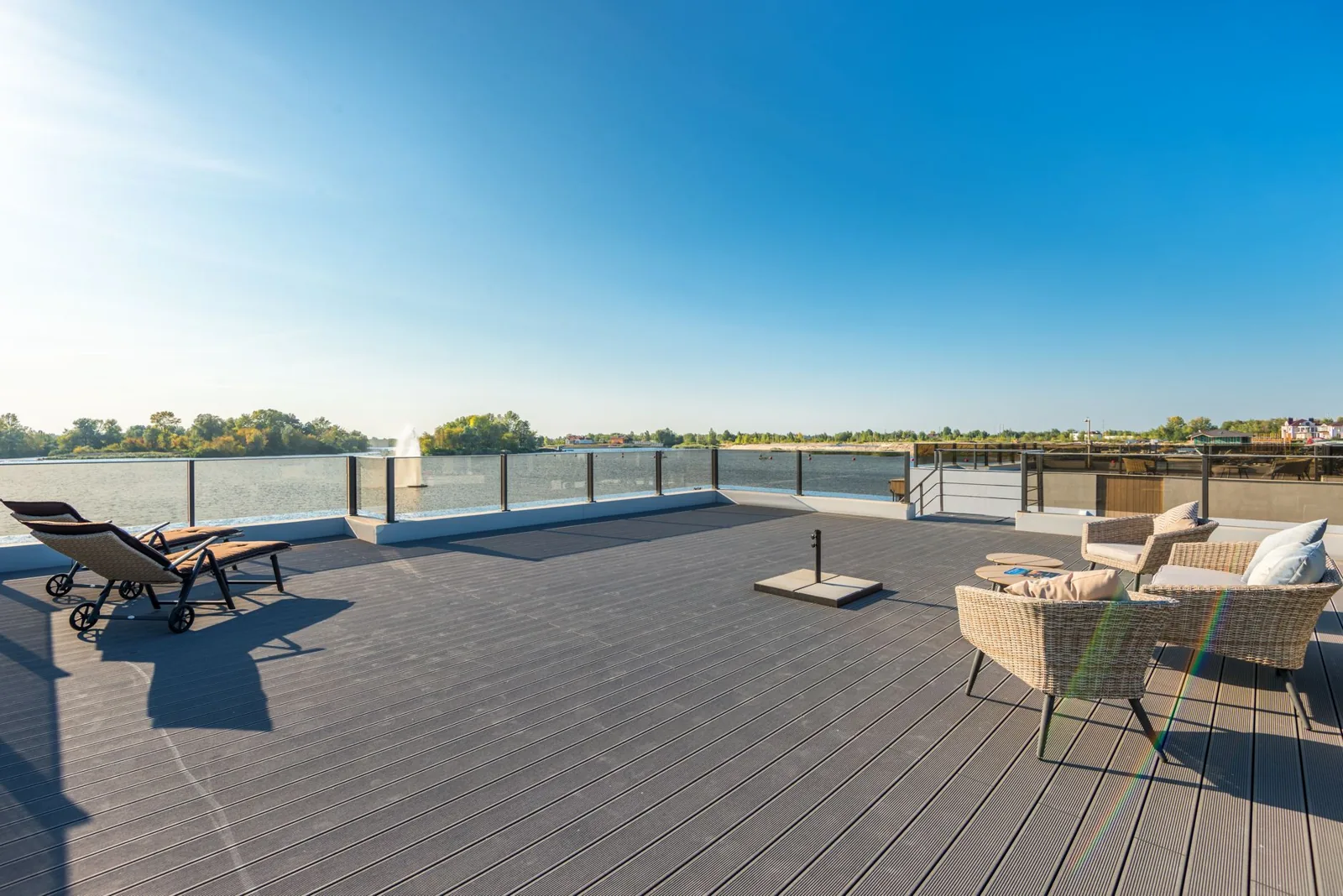
Composite Decking Pros and Cons: What Homeowners Need to Know Before Building
If you’re planning to build or replace a deck, you’ve almost certainly landed in the middle of the composite decking pros and cons debate. Composite boards — a manufactured blend of recycled wood fiber and plastic resin — have grown from a niche alternative into the best-selling decking category in North America, and for solid reasons. But they still cost more up front than pressure-treated lumber, and they carry a few quirks that never show up in the showroom photos.
This guide runs through the real trade-offs — cost per square foot, maintenance demands, heat retention, and lifespan — so you can decide whether composite is the right material for your climate, your budget, and your household. No, composite isn’t a zero-effort “set it and forget it” product, and it isn’t the correct answer for every project. Here’s an honest, numbers-first look at what you’re actually buying.
What Is Composite Decking?
Composite decking is a manufactured plank made from reclaimed wood fiber mixed with recycled plastic — often polyethylene pulled from milk jugs and shopping bags — bonded under heat and pressure into boards that resemble lumber but behave differently. The category splits into two main types:
- Capped composite — a solid composite core wrapped in a polymer shell that shields against stains, fading, and moisture. Trex Transcend, TimberTech AZEK, and Fiberon Concordia all fall into this group.
- Uncapped (first-generation) composite — the original boards without the protective shell. They cost less but stain and fade more easily, and have largely been phased out in favor of capped lines.
Brand matters more here than it does with wood. Trex, TimberTech, Fiberon, MoistureShield, and AZEK dominate the U.S. market, and their residential warranties run anywhere from 25 years to a limited lifetime.
Composite Decking Pros and Cons at a Glance
Here’s the short version before we get into the details.
| Factor | Composite Decking | Pressure-Treated Wood |
|---|---|---|
| Installed cost per sq ft | $30–$60 | $15–$30 |
| Annual upkeep | Occasional soap-and-water wash | Sand, stain, and seal every 1–2 years |
| Typical lifespan | 25–30 years or more | 15–20 years with regular care |
| Splintering and warping | Rare | Common over time |
| Heat in direct sun | Hot, especially dark colors | Hot, but generally cooler than composite |
| Repairability | Boards are replaced, not refinished | Can be sanded and restained |
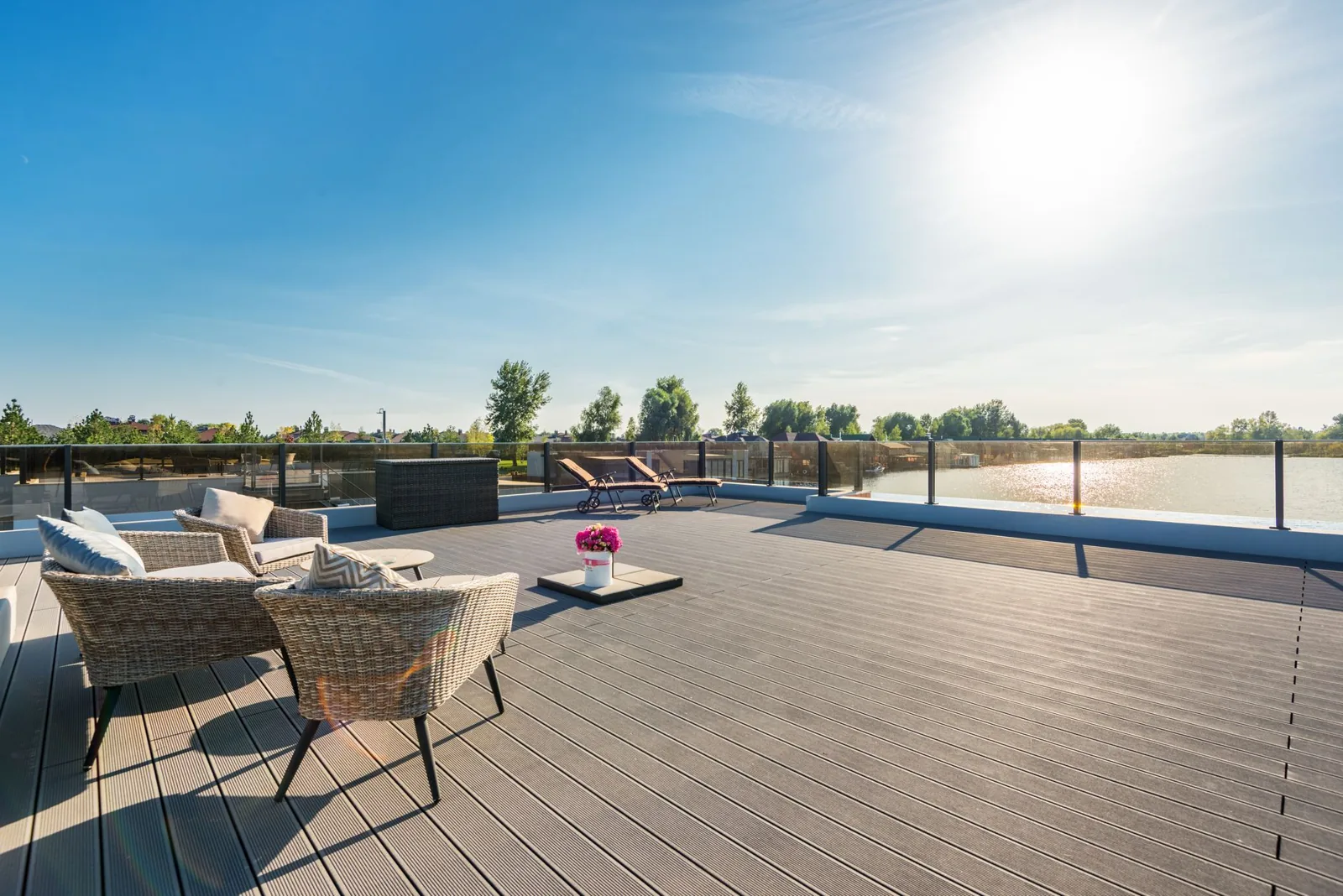
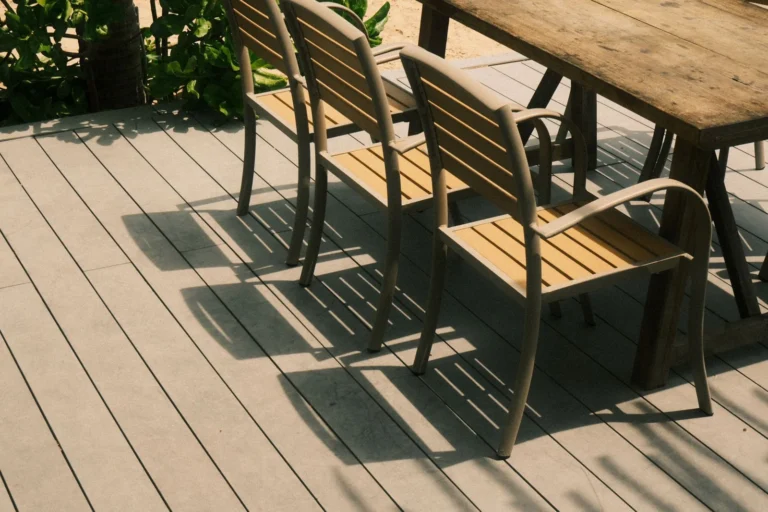
Photo by Max Vakhtbovych via Pexels
The Advantages of Composite Decking
Low maintenance is the headline benefit
The single biggest reason homeowners choose composite is that you never sand, stain, or seal it. A wood deck needs a full wash-and-restain routine roughly every one to two years, and skipping that chore is exactly how boards start to rot. Composite asks only for the occasional scrub with soap, water, and a soft-bristle brush, plus a rinse to clear off pollen and grime.
Long-term durability
Capped composite resists moisture, insects, and rot in ways wood structurally cannot. It won’t splinter, warp, or develop the cupping you see on older lumber decks, which makes it a practical choice for barefoot households with kids and pets. Most manufacturers back their capped boards with 25- to 50-year fade-and-stain warranties — Trex’s Transcend line, for example, carries a 25-year limited residential warranty against fading and staining.
Clean sightlines and hidden fasteners
Because boards are manufactured to spec, color stays consistent from plank to plank, and grooved-edge boards accept hidden clip fasteners that leave the surface free of visible screw heads. That produces clean, uninterrupted sightlines that are hard to reproduce with face-screwed pressure-treated lumber.
Substantial recycled content
Most composite is 90% or more recycled material by weight. That’s a legitimate environmental point in its favor, even if it runs a distant second to the practical benefits for most buyers.
Better resale appeal
Low-maintenance, no-splinter decking reads as a selling point during an appraisal or open house. Buyers who balk at the idea of staining a deck every other spring tend to pay attention when a listing highlights a capped composite surface.
Composite Decking Cons and Drawbacks
Higher upfront cost
Composite costs roughly two to three times what pressure-treated pine costs at the material level before labor even enters the picture. Pressure-treated boards run about $2 to $5 per square foot, while composite typically lands between $4 and $13 per square foot. Fully installed, a pressure-treated deck might total $15 to $30 per square foot; a composite deck commonly runs $30 to $60. On a typical 300-square-foot deck, that’s the difference between roughly $4,500 to $9,000 for wood and $9,000 to $18,000 for composite.
It gets hot in direct sun
Composite retains heat more than wood, and darker colors are the worst offenders. On a 90°F afternoon, dark boards can get hot enough to make bare feet and dog paws uncomfortable. Lighter colors and heat-reducing technologies — MoistureShield, for one, markets cooler surface temperatures on some lines — help, but this is a real consideration in sunny southern climates.
Not completely maintenance-free, and it can stain
Capped boards resist most stains, but grease, berry juice, and sunscreen can still leave marks if they sit. Uncapped boards stain far more easily. Mildew can also form on the surface in damp, shaded spots, which means an occasional cleaning is still part of ownership. The chore is lighter than wood’s, but it doesn’t disappear entirely.
Some fading over its life
Modern capped boards fade far less than first-generation composite, but a slight color shift in the first few months is normal, and darker tones can lighten after years in full sun. This is why fade warranties exist in the first place.
It can feel springy, and scratches don’t sand out
Composite is heavier and a touch more flexible than dimensional lumber, so on wide joist spacing it can feel bouncy underfoot. Frame it properly — most manufacturers call for joists 12 to 16 inches on center — and the deck feels solid, but shortcuts in framing show up quickly. And unlike wood, a deep gouge in a composite board can’t be sanded out; a damaged plank usually gets replaced rather than repaired.
Photo by Ali Soheil via Pexels
Composite vs. Wood Decking: A Full Comparison
If you’re deciding between composite and the alternatives, the cost table below puts the leading options side by side.
| Deck material | Material cost per sq ft | Installed cost per sq ft | Years of service |
|---|---|---|---|
| Pressure-treated pine | $2–$5 | $15–$30 | 15–20 |
| Cedar | $4–$7 | $20–$40 | 20+ (with care) |
| Premium hardwood (ipe) | $9–$14 | $40–$70 | 25+ |
| Capped composite | $4–$13 | $30–$60 | 25–30+ |
| PVC (such as AZEK) | $9–$12 | $40–$70 | 25–30+ |
The split decision usually comes down to this: wood wins on first cost and repairability, while composite wins on the decades of staining, sealing, and sanding you never do. If you’d rather compare a wood deck against an entirely different surface, see our deck vs. patio cost breakdown before you commit.
What Does Composite Decking Cost in 2026?
Budget is where most composite decking pros and cons conversations stall, so let’s be precise. Material costs for capped composite run $4 to $13 per square foot depending on brand and tier. Trex’s line illustrates the spread well: Enhance is the entry tier, Select sits in the middle, and Transcend is the premium capped line — each step up adds a dollar or two per square foot and a longer warranty.
Installed pricing is another story, because labor accounts for roughly half of a deck project’s total. Framing, footings, railing, and hidden fasteners all add up, and a full composite deck with matching railing frequently lands between $30 and $60 per square foot nationally. For a 300-square-foot deck, expect a realistic range of $9,000 to $18,000. Regional labor markets swing those numbers hard, so a bid in coastal California will look very different from one in rural Ohio. For a deeper cost review, This Old House breaks down composite decking installation costs by scope and finish level.
How Long Does Composite Decking Last?
Capped composite commonly lasts 25 to 30 years, and many manufacturers now suggest their premium boards can go 50 years or more with basic care. Pressure-treated pine, by comparison, needs diligent staining and sealing to reach 15 to 20 years, and neglect can cut that figure in half. The trade-off is permanent, though: at the end of its life, aging composite is generally replaced rather than refinished, whereas wood can be sanded back and restained indefinitely if the structure underneath holds up. On lifespan alone, the composite decking research at Bob Vila suggests capped boards deliver the more predictable long-term value for most households.
Frequently Asked Questions
Is composite decking worth the extra cost?
For most households, yes — if you plan to stay in the home five or more years. The upfront premium usually pays for itself through the staining and sealing you skip and the resale appeal of a low-maintenance deck. If you’re on a tight budget or plan to sell soon, pressure-treated wood often makes more immediate financial sense.
Does composite decking get hotter than wood?
Generally, yes. Composite sits at the top of the deck-heat rankings, especially in darker colors and full sun. Lighter boards and heat-reducing product lines narrow the gap, but in hot climates, plan for rugs, shade, or footwear on summer afternoons.
Can composite decking be painted or refinished?
No. Composite is not designed to be painted, stained, or sanded, and doing so usually voids the warranty. If a board is stained or deeply scratched, replace the individual plank rather than trying to refinish it.
How do you clean composite decking?
Wash it with warm water, mild soap, and a soft-bristle brush, then rinse. For mildew in shady spots, a composite-safe deck cleaner works. Avoid pressure washers on high settings, which can etch the cap and void the warranty.
Does composite decking fade over time?
Modern capped boards fade far less than earlier generations, but some initial color shift is normal as the surface cures. Premium lines carry 25- to 50-year fade-and-stain warranties precisely because fading is expected to be minimal, not zero.
The Bottom Line
Composite decking pros and cons boil down to a trade between money now and labor forever. You pay two to three times as much up front, and in return you get a deck that never needs sanding, staining, or sealing, won’t splinter, and should still look clean 25 years from now. The downsides — higher first cost, more heat underfoot, and boards that get replaced rather than repaired — are real, but they matter less to homeowners who value their weekends.
Before you decide, price the project from both angles. If composite’s cost gives you pause, compare it against the numbers in our deck replacement cost guide and our roundup of pergola ideas for the backyard to see whether a shaded structure or a smaller footprint changes the math. When in doubt, order a few full-length sample boards from Trex, TimberTech, and Fiberon, set them in the sun where the deck will live, and walk across them barefoot on a hot afternoon. That ten-minute test will tell you more about how composite feels than any spec sheet.