
Deck Replacement Cost: What Homeowners Pay in 2025
Deck replacement cost is one of the bigger line items you’ll face on an exterior project, and the range is genuinely wide. Most homeowners pay between $4,000 and $11,500 to tear out an old deck and build a new one, with a national average around $7,700 for a standard 300-square-foot wood deck. Where you land depends almost entirely on three things: size, material, and how much of the old structure can be saved.
A well-built deck survives 10 to 15 years if it sits on solid footings and gets regular sealing or staining. When boards start to rot, the ledger pulls away from the house, or the joists bounce underfoot, patching stops being cheaper than starting over. The numbers below break down exactly what you’re paying for, so you can get three quotes and compare them on equal terms.
How Much Does Deck Replacement Cost?
Replacement almost always costs more than the original build, and the reason is simple: you’re paying for demolition and disposal before a single new board goes down. Labor makes up 50% to 60% of the total price, with materials covering the rest.
Expect to pay $15 to $40 per square foot on average. At the low end, that’s a basic pressure-treated pine deck with a simple rectangular layout. At the high end, it’s composite decking with curves, multiple levels, built-in benches, and code-compliant railings. These per-square-foot figures “installed” already include framing, fasteners, and the labor to put it together.
A useful way to picture the range:
- 200 sq ft basic pressure-treated deck: $3,000–$6,000
- 300 sq ft mid-range pressure-treated deck: $4,500–$9,000
- 300 sq ft composite deck: $9,000–$18,000
- 500 sq ft composite with stairs and railing: $15,000–$30,000+

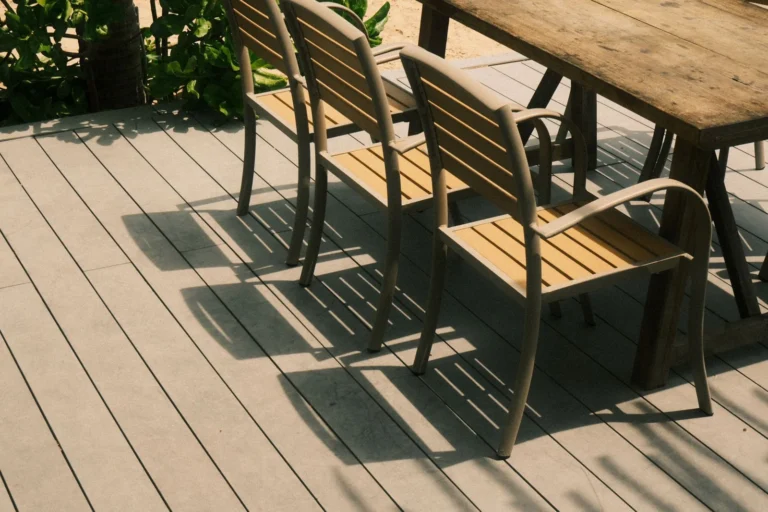
Photo by Matheus Bertelli via Pexels
Deck Replacement Cost by Material
The board you walk on drives more of the budget than almost anything else. Same square footage, four very different bills:
| Material | Cost per sq ft (installed) | Lifespan | Maintenance |
|---|---|---|---|
| Pressure-treated pine | $15–$30 | 10–15 years | Stain/seal every 1–2 years |
| Cedar / redwood | $25–$45 | 15–20 years | Seal every 2 years |
| Composite | $30–$60 | 25–30 years | Occasional washing |
| PVC / vinyl | $40–$75 | 30+ years | Minimal |
Pressure-treated southern yellow pine is the budget workhorse. It’s the cheapest option and completely fine for most yards, but it warps and checks as it dries, and it needs a fresh coat of stain nearly every year in harsh climates.
Cedar and redwood cost more up front and look beautiful as they weather to silver, but they’re soft. High heels, dog claws, and heavy furniture gouge them, and the boards won’t last much longer than pressure-treated pine in a wet region.
Composite brands such as Trex, TimberTech, and Fiberon now make up the fastest-growing segment. You pay roughly double the cost of pine, but there’s no annual staining, no splinters, and no rot. That said, composite isn’t maintenance-free — it can develop “bloom” or fade in direct sun, and it does get hot under bare feet in summer.
PVC boards (Azek is the big name) sit at the top. They’re completely waterproof and effectively immune to insect damage, which makes them worth the premium if you’re near the coast or in a termite-heavy zone.
What Drives the Price Up or Down
Beyond material, five factors move a quote by thousands of dollars:
Structural condition. If the footings and frame are sound, you might only replace decking and railings — a “resurface” that can run 40% cheaper than full replacement. If the joists are rotted or the stair stringers are shot, the crew rebuilds everything.
Height and access. A second-story deck or one on a hillside needs scaffolding, longer posts, and more safety equipment. Labor jumps 20% to 40% for elevated work, and if the crew can’t get a wheelbarrow to the site, materials have to be carried by hand.
Railings. Code now requires railings on any deck more than 30 inches above grade. Aluminum, glass, or cable railing systems can add $50 to $150 per linear foot over a basic wood baluster rail.
Stairs and built-ins. Every set of stairs, bench, planter, and privacy screen adds a line item. A single custom staircase can add $1,500 to $3,000 on its own.
Permits and code. Most municipalities require a permit for a structural deck replacement, usually $200 to $600, and some now mandate 42-inch guards and specific ledger fastening. Skipping the permit saves money today and bites you when the inspector or your home insurer finds out.
Replace or Repair: When Rebuilding Makes Sense
Not every sagging deck needs to come down. If the issue is isolated — a few split boards, one rotted post, loose railing — a repair for $500 to $2,000 is the smarter call.
You’re better off replacing the whole thing when:
- More than 25% of the decking is soft, splintered, or cupped
- The ledger board has pulled away from the house (a safety issue, not a cosmetic one)
- Joists show rot where they meet the beam
- The deck is 15+ years old and you’re considering composite anyway
If you’re weighing a full rebuild against a different project entirely, see how a deck compares to a patio on total cost. A ground-level concrete or paver patio often runs cheaper to build and cheaper to keep, which matters if the deck is purely decorative space.
Practical Ways to Lower the Cost
You don’t have to accept the first number in front of you. These moves reliably trim the final bill:
Resurface instead of rebuild. If the frame is good, replace only the decking and railing. It’s the single biggest saving available, often cutting the job nearly in half.
Stick to standard sizes. Deck boards come in 12-, 16-, and 20-foot lengths. Design the deck in even increments so the crew isn’t throwing away cutoffs you still paid for.
Do the demolition yourself. Tearing out the old deck is unskilled but hard labor. Pulling it out and hauling it to the curb can save $800 to $1,500, and most crews will quote you a lower price for a clear site.
Time your project. Contractors book up April through July. Getting quotes in late fall or winter often lands you 5% to 10% off, simply because schedules are thinner.
Buy materials yourself, selectively. Ordering fasteners, joist tape, and railing hardware on your own can avoid the 10% to 20% markup some builders add. Leave the lumber and composite to the contractor so you’re not stuck with defective stock.
Compare resurface vs. full composite math honestly. A $9,000 composite deck now versus a $6,000 pine deck that needs $600 a year in staining for 15 years — the composite usually wins over the long run. Run the numbers for your own climate before you default to the cheapest quote.
Once the deck is in, budget for what surrounds it. A backyard pergola or a covered patio can extend how many months you actually use the space, which changes whether a bigger deck is worth the cost.

Photo by Nasim Didar via Pexels
Frequently Asked Questions
How much does it cost to replace a 12×12 deck?
A 12×12 deck is 144 square feet. In pressure-treated pine, expect $2,200 to $4,300 installed. In composite, plan on $4,300 to $8,600 depending on the brand and railing choice.
Is it cheaper to repair or replace a deck?
It depends on how much is damaged. Replacing a handful of boards or one railing section is far cheaper — usually under $1,000. But if the frame or ledger is compromised, repair crews are often bandaging a structure you’ll rebuild within a few years anyway, and replacement becomes the better long-term value.
How long does a deck replacement take?
Most standard replacements take 3 to 7 working days: one to two days for demolition, one to two for the frame, and the rest for decking, railing, and stairs. Elevated decks, custom layouts, or composite installs can stretch to two weeks.
Do I need a permit to replace a deck?
Usually yes, if it’s attached to the house, over 30 inches off the ground, or over 200 square feet. Permits typically cost $200 to $600 and require one or two inspections. Your contractor should handle the paperwork as part of the quote.
Can I put new decking over old?
You shouldn’t. Laying new boards over a rotting frame hides the problem and traps moisture, which accelerates the damage. There’s one exception: if the frame was built late-model and inspected, a full resurface (replacing decking and railings only) is legitimate — but that still means pulling the old boards off first.
What is the most expensive part of deck replacement?
Labor and the frame. Framing lumber, footings, and the crew’s time usually cost more than the visible decking, which surprises a lot of homeowners who focus their research on board prices. The decking is the part you see; the structure underneath is where the money actually goes.
The Bottom Line
Deck replacement cost in 2025 typically lands between $4,000 and $11,500, with material choice and structural condition doing most of the heavy lifting on the final number. The single most effective way to control the price is to find out whether you need a full rebuild or a resurface — a difference that can be worth thousands.
Get at least three itemized quotes, ask each contractor whether the frame can be reused, and verify the permit before work starts. References from This Old House and Angi both point toward checking joist condition when pricing the job. A deck that’s rebuilt properly on a sound frame should carry you 15 to 25 problem-free summers — and that’s the number that matters most when the quotes come back.