Storm Door vs Screen Door: Which One Does Your Entry Need?
A storm door and a screen door both hang on the outside of your front or back entry, and to the untrained eye they look like the same job done twice. They aren’t. A screen door is a lightweight frame with mesh that keeps bugs out while letting air move through. A storm door is a full second door, usually with glass, that shields your primary door from weather and adds a layer of insulation and security. The storm door vs screen door question comes down to one thing: are you solving for airflow or for protection? Most homeowners end up wanting a little of both, which is why the comparison is worth getting right before you spend the money.
The good news is that neither option is expensive next to a full front door replacement, and both can be installed in an afternoon if you’re comfortable with a drill and a level. The bad news is that buying the wrong one means a product that never gets used, or worse, a storm door that bakes your entry in summer and voids the warranty on the expensive fiberglass door behind it. Here’s how to sort it out.
What a Storm Door Actually Does
A storm door is a complete outer door mounted in front of your existing entry door. The frame is typically aluminum, steel, vinyl, or wood, and the lower and upper panels are glazed with glass — either full-view or a vented half-glass/half-screen arrangement. Well-known manufacturers include Larson, Andersen, Pella, and EMCO, and you’ll see their models at every big-box home center.
The core functions of a storm door are:
- Weather protection. It takes the brunt of rain, wind, sleet, and direct sun that would otherwise hit your main door.
- Insulation. The trapped air between the storm door and the entry door acts as a buffer, which is why storm doors originated in colder climates.
- Security. A locked storm door is a second barrier, and most come with a separate deadbolt or latching hardware.
- Light and ventilation. Full-glass storm doors let daylight into a dark entry; models with interchangeable glass and screen panels swap from winter mode to summer mode.
Modern storm doors have improved well beyond the rattle-trap aluminum units of the 1970s. Today’s mid-range models have foam-insulated frames, magnetic weatherstripping, and tempered safety glass, and they seal tightly enough that the door actually works as a miniature airlock.
What a Screen Door Does
A screen door is the simpler machine: a frame, usually aluminum or wood, holding insect mesh instead of glass. Its entire job is airflow without bugs. Open the main door, keep the screen door latched, and the house breathes without welcoming flies, mosquitoes, and moths.
You get three broad styles today:
- Fixed/pet screen doors. A permanent mesh panel in a frame. $40 to $150 at the entry level.
- Retractable screen doors. A cartridge in the side jamb pulls a mesh panel across the opening and disappears when not in use. $150 to $400, and they’re the most common upgrade for people who hate the look of a permanent screen.
- Storm-and-screen combination. This is where the categories blur — a storm door with a sliding glass panel that retreats to reveal the screen beneath.
Screen doors are popular on back and side doors to kitchens and decks, where cross-ventilation matters more than curb appeal. They add nothing to insulation, little to security, and they need their mesh patched or replaced every few years because pets and kids go through them.
Storm Door vs Screen Door: Side-by-Side
The table below frames the differences people actually care about when they’re standing in the aisle trying to decide.
| Feature | Storm Door | Screen Door |
|---|---|---|
| Primary job | Weather protection + insulation | Airflow without insects |
| Panel material | Glass (full or partial) | Insect mesh |
| Typical cost (installed) | $250 – $600 | $100 – $400 |
| Insulation value | Moderate (adds trapped air) | None |
| Security | Second locked barrier | Minimal |
| Ventilation | Only with vented/retractable glass | Full-time airflow |
| Durability | High (aluminum/steel frame) | Moderate (mesh wears) |
| Lifetime | 15 – 30 years | 5 – 15 years |
| Best location | Front entry, exposed doors | Back/side doors, decks |
The cost spread is real but modest. A basic retractable screen door installed runs $100 to $250; a mid-grade full-view storm door from Larson or Andersen lands around $300 to $500 installed, and custom-fit units with high-end hardware can push toward $700. None of this approaches a front door replacement cost, which commonly starts north of $1,000 for a quality slab and only climbs from there.
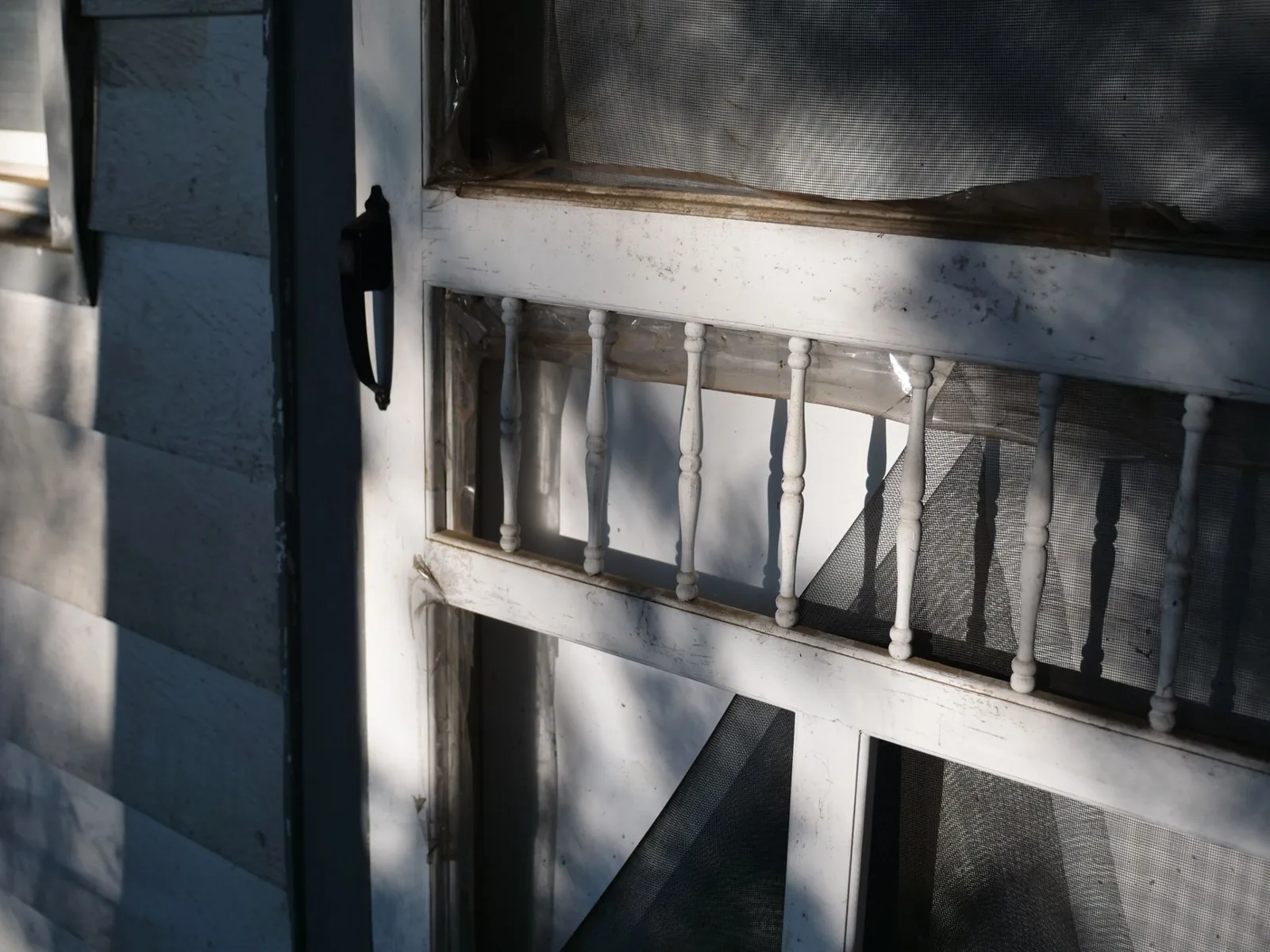
Photo by Janelle Welch via Pexels
When a Storm Door Makes Sense
A storm door earns its cost fastest when your entry door is exposed and working hard. The clearest cases:
- You live in a cold or storm-prone climate. Snow, sleet, and driven rain all land on the storm door instead of your good door, extending its life and cutting drafts.
- Your entry door is old or lightly insulated. A storm door is the cheapest insulating upgrade you can make to an existing entry — far less than replacing a window or the door itself.
- You want daylight in the entry. Full-view glass storm doors brighten a dark foyer without leaving the front door open.
- You want a second security layer. A locked storm door means a visitor has to get through two locked doors while you’re still deciding whether to open the first one.
There’s a well-known caveat worth repeating. A glass storm door on a south- or west-facing entry traps heat between the two doors, and the pocket can reach temperatures hot enough to fade or warp a synthetic entry door. Several fiberglass and steel door manufacturers specifically note that adding a storm door may void the finish warranty if the door is in direct sun. If your entry gets blasted by afternoon sun, either pick a vented storm door, or skip the storm door and put your money into a better energy-efficient door and windows instead.
When a Screen Door Is the Better Pick
Screen doors win where the goal is air, not armor:
- Hot, humid summers. On a still August afternoon, a screen door turns the kitchen door into a fresh-air vent.
- Back or side entries. These doors lead to decks, patios, and yards; airflow and pet access matter more than curb appeal.
- Tight budgets. If the goal is just bugs-out-air-in, a $100 fixed screen door does the job and leaves the rest of the money for other projects.
- Rental or seasonal properties. A screen door is cheap to buy, cheap to repair, and easy to remove.
The catch is durability. Retractable screens have a return spring and track that eventually wear out, and fixed mesh tears. Count on servicing or replacing a screen door every five to ten years, versus twice that for a well-built storm door.
Photo by Yunus KALÇIK via Pexels
The Hybrid: One Door, Two Seasons
Rather than forcing a binary choice, the practical answer for many homeowners is a single storm door with interchangeable glass and screen panels. Through the season you slide the glass up or swap panels out, getting the storm door’s protection in winter and the screen door’s airflow in summer from the same frame. This is the “storm and screen” combo and it’s the reason the storm door vs screen door debate feels outdated to anyone who has owned a vented full-view model.
A few buying specifics if you go this route:
- Frame material. Aluminum is the sweet spot for strength, price, and rust resistance. Steel is heavier and stronger; wood looks best but needs paint and rots if neglected.
- Glass type. Tempered safety glass is standard and worth insisting on for anything near traffic or pets. Low-E coatings help cut solar gain on sun-facing doors.
- Ventilation hardware. Look for a top or bottom sliding glass insert — or a full panel that pops out in favor of a screen — rather than a fixed glass unit if you want the airflow option later.
- Hardware quality. The push-button latch, closer, and hinges take the most abuse. Buy a model with a hydraulic or pneumatic closer you can adjust, not a skinny chain.
Retractable screens as a standalone product cover the same two-season need in reverse: full screen in summer, rolled away to nothing — and no second surface between you and your existing door — the rest of the year. If your entry door is already in great shape and you just want the bugs gone, a retractable screen is the cleaner, cheaper move than a full storm door.
Installation and What It Really Costs
Both doors are beginner- to intermediate-friendly weekend projects, but the honest difference is that storm doors are heavier and fussier to square.
A screen door installs by hanging the hinged frame in the existing jamb, shimming it plumb, and screwing through the jamb. DIY tools: drill, level, shims, and an hour or two. Expect $40 to $400 for materials depending on fixed versus retractable, with pro labor adding $75 to $150 if you’d rather not touch it.
A storm door is close to a full door installation. You hang a complete pre-hung unit, secure the Z-bar frame to the trim, mount the closer, and cut or trim the bottom expander to seal the threshold. Manufacturers quote $200 to $450 for the door itself, and a handyman typically charges $100 to $200 to install it, putting the all-in range near $250 to $600. Models with a built-in screen insert, Low-E glass, and better hardware run toward the top of that band.
One measurement rules both projects: the rough opening. Storm and screen doors are sold in standard widths (32″, 34″, 36″) and required in several heights, so measure the width at top, middle, and bottom of the opening and order to the smallest, then trim the bottom expander to close the gap. Get this wrong and the door binds or won’t latch.
Frequently Asked Questions
Is a storm door the same as a screen door?
No. A screen door holds insect mesh to allow airflow, while a storm door holds glass to shield your entry from weather and add insulation. Many storm doors include a retractable or interchangeable screen for the summer, which is where the confusion comes from.
Does a storm door keep cold out better than a screen door?
Yes. A screen door offers no insulation because it is open to the air by design. A storm door traps a layer of air between itself and your entry door, which buffers cold, wind, and drafts. It’s the single cheapest insulating upgrade for an exposed entry.
Can I install either door myself?
Mostly. A screen door is a straightforward DIY job with basic tools. A storm door is a full pre-hung door, heavier and more finicky to square, but still within reach of a confident DIYer over an afternoon. If you’re at all unsure of the rough-opening measurements, pay a handyman $100 to $200.
Will a storm door damage my entry door?
It can, in one specific situation. A full-glass storm door on a sun-exposed entry traps heat between the two doors, which can fade finishes and even warp synthetic doors, and may void some door warranties. Use a vented or Low-E glass storm door, or skip it, on south- and west-facing entries.
Which is right for my front door?
If your front entry faces weather, you want daylight, or you’d welcome a second locked barrier, a storm door (ideally with a summer screen insert) fits. If the door leads to a deck or yard and you mostly want fresh air without bugs, a screen door — fixed or retractable — is the better value.
The Bottom Line
There is no universally correct answer to storm door vs screen door, but there is a correct decision for your specific entry. Pick a storm door when the front of the house takes wind, rain, and cold and you’d gain from insulation, light, or a second lock. Pick a screen door when the door is a fresh-air valve for a kitchen, deck, or yard. If you’re torn, a vented storm door with interchangeable glass and screen gives you both seasons in one frame, and a retractable screen gives you airflow with nothing left on the jamb when you don’t want it.
Both are cheap relative to the doors they protect — a storm door runs about $250 to $600 installed, a screen door $100 to $400 — and both pay off over years of use. For a deeper look at what the door behind them costs, see our guide to front door replacement cost, or if you’re replacing an entry’s glass entirely, start with the double-hung versus casement comparison to match the windows to your door. For the classic authoritative take, the This Old House guide to storm doors and Energy.gov’s guidance on doors are both worth a read before you buy.