Best Decking Material Compared: Wood, Composite & PVC Decks
The best decking material compared head-to-head rarely produces a single winner, because the right choice depends on your budget, your climate, and how many weekends you are willing to spend on maintenance. Wood, composite, and PVC boards can look nearly identical from the curb, yet they differ sharply in cost per square foot, lifespan, and the way they age.
This guide walks through the four materials most homeowners actually consider — pressure-treated lumber, natural cedar and redwood, wood-plastic composite, and pure PVC — with real installed costs, honest pros and cons, and a clear recommendation for common situations. By the end you should be able to price your deck and decide without second-guessing yourself.
Why Choosing the Right Decking Material Matters
A deck is one of the few home upgrades you will touch every single day for a decade or more, and the material you pick drives three decisions that are hard to reverse later. First is cost, both today and over time. A cheaper board that needs staining every year and replacement in twelve years can easily end up costing more than a pricier composite that you wash once a season.
Second is safety and structure. The material determines joist spacing, fastener type, and whether the surface gets slick in wet or freezing weather. Third is resale. A faded, splintered wood deck detracts from a listing, while a clean composite deck reads as an asset. If you are still weighing whether a deck is the right structure at all, our deck vs patio cost breakdown compares the two options side by side so you can make that call first.
Decking Materials at a Glance
Before the details, here is how the four main contenders stack up on the numbers most people care about. Costs below are national averages for materials only per square foot, with installed ranges noted in the sections that follow.
| Feature | Pressure-Treated Pine | Cedar & Redwood | Composite | PVC (Cellular Vinyl) |
|---|---|---|---|---|
| Material cost / sq ft | $3–$6 | $5–$10 | $4–$12 | $8–$16 |
| Installed cost / sq ft | $15–$25 | $20–$35 | $30–$45 | $35–$50 |
| Typical lifespan | 10–15 years | 15–20 years | 25–30 years | 30–50 years |
| Upkeep | Stain every 1–2 years | Stain every 2–3 years | Occasional wash | Occasional wash |
| Best for | Tight budgets | Natural look | Low maintenance | Maximum durability |
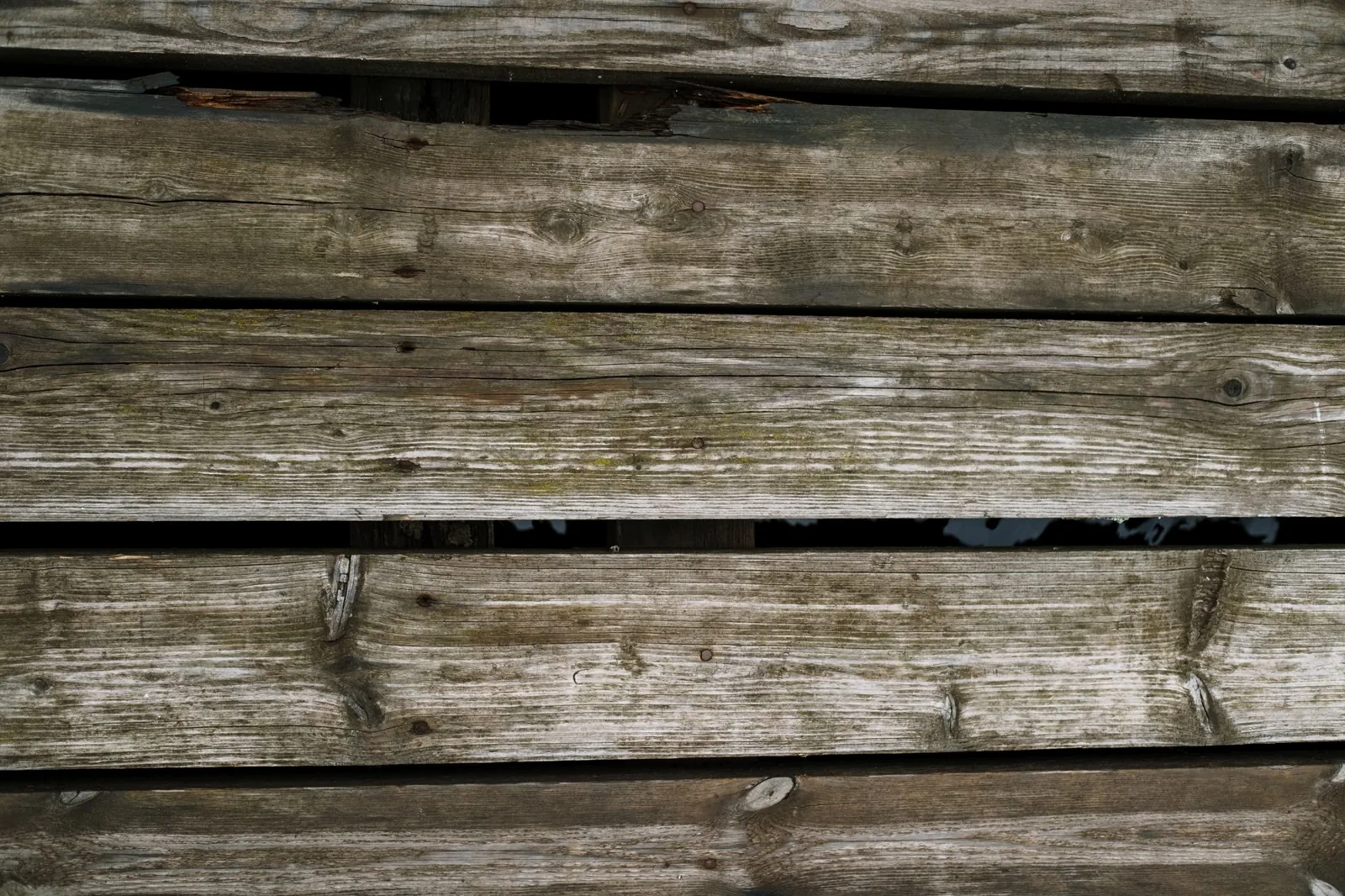
Photo by cottonbro studio via Pexels
Pressure-Treated Lumber: The Budget Workhorse
Pressure-treated (PT) pine is the default choice for a reason: it is the cheapest decking you can buy, and it is sold at every lumberyard in North America. The wood is soaked in preservative chemicals under pressure, which protects it against rot and insects. Expect to pay roughly $3 to $6 per square foot for the boards themselves, with a professionally installed deck landing between $15 and $25 per square foot on average.
The trade-off is upkeep. PT pine drinks up moisture as it dries, which causes warping, cupping, and cracking as the years pass. You will need to stain or seal it every one to two years, and even well-maintained boards usually last 10 to 15 years before sagging becomes obvious. It also arrives wet from the mill and should dry for several weeks before you fasten it down, or you risk gaps opening up later.
Who pressure-treated lumber is right for
- Budgets under $10,000 for a standard-sized deck
- Homeowners who do not mind yearly staining
- Ground-level decks where replacement boards are easy to reach and swap
Cedar, Redwood & Tropical Hardwoods: The Natural Option
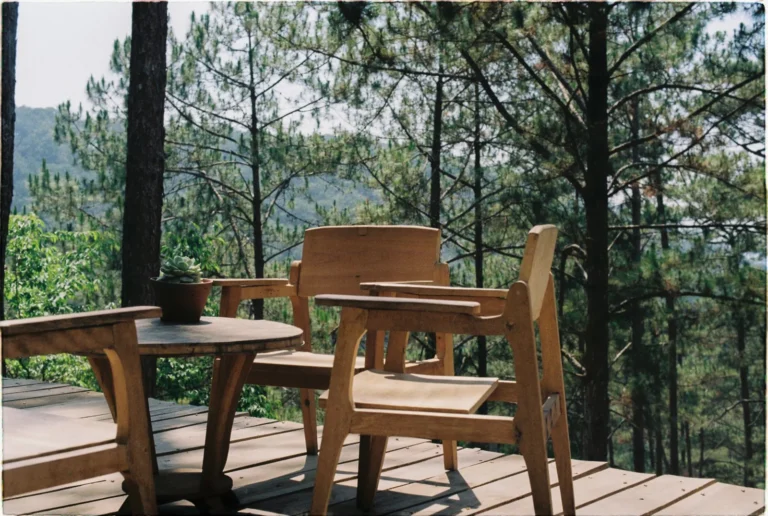
If you want real wood without the green-tinted, chemical look of PT pine, cedar and redwood are the step-up choices. Both are naturally rot-resistant softwoods that weather to an attractive silver-gray if left untreated. Western red cedar runs $5 to $10 per square foot, while redwood and premium grades of cedar push higher. Tropical hardwoods such as ipe and cumaru sit above that, often $10 to $20 per square foot, but they deliver a 25-year lifespan that rivals composites.
These woods look and feel premium, which is why they are a favorite for upscale builds. The downsides are real, though. Softwoods scratch and dent easily under patio furniture, and even cedar wants a fresh coat of stain every two to three years to hold its color. Tropical hardwoods are so dense they can dull saw blades and require pre-drilling for every screw, which drives up labor cost even though the material price looks reasonable.
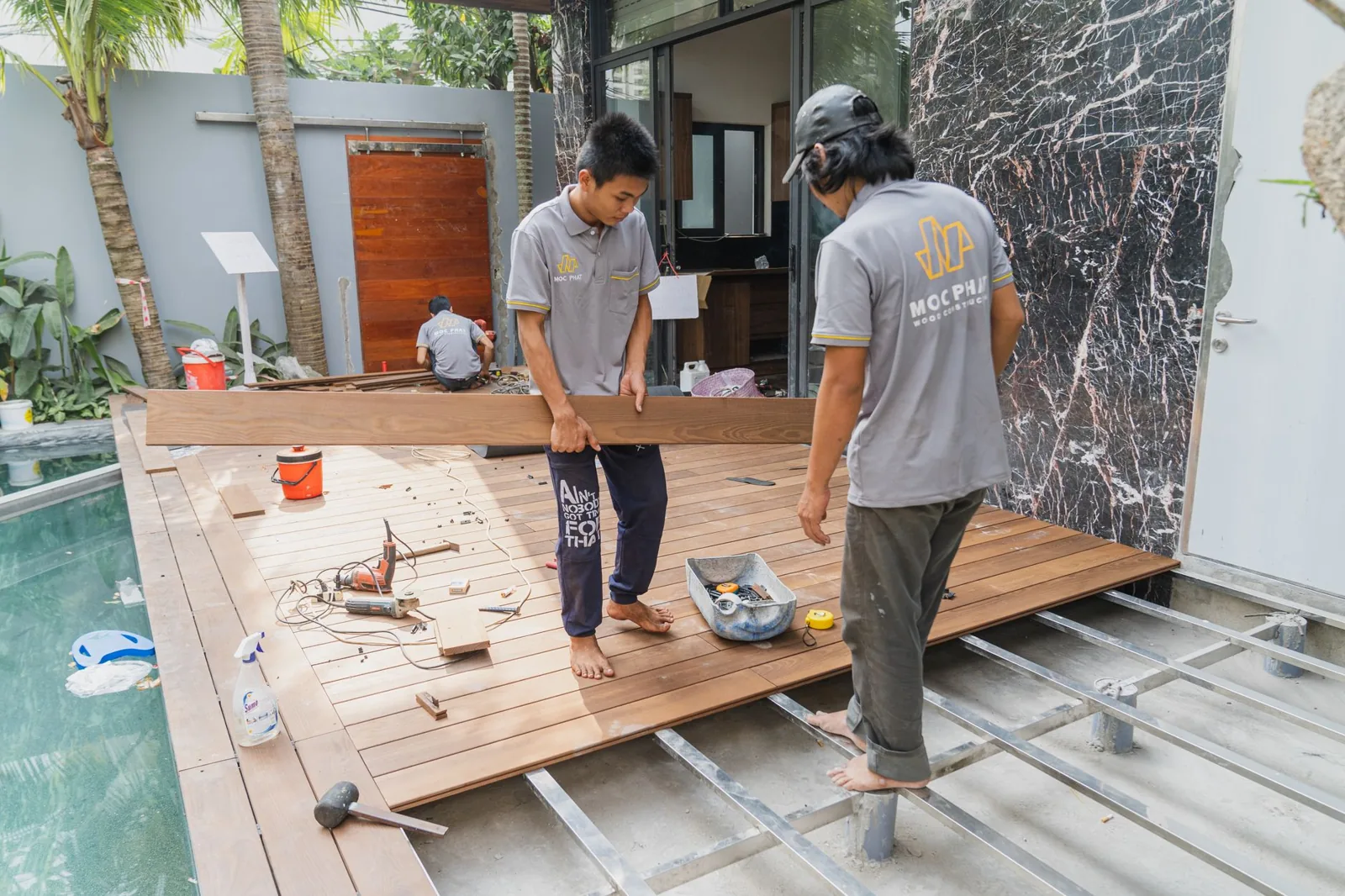
Photo by CÔNG TY CP THI CÔNG MỘC PHÁT via Pexels
Composite Decking: The Low-Maintenance Middle Ground
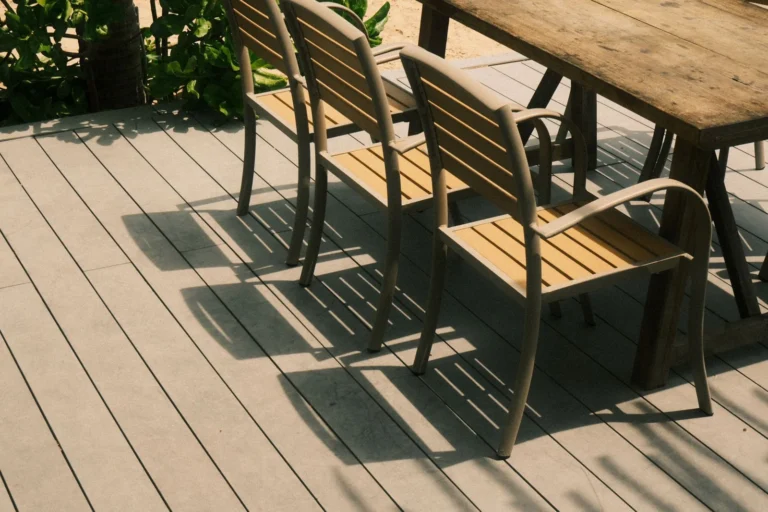
Composite is where most homeowners land once they look past the sticker price. Made from a blend of recycled wood fibers and plastic, composite boards from brands like Trex, TimberTech, and Fiberon resist rot, splinters, and insects without any staining at all. Material prices run $4 to $12 per square foot depending on the line, and an installed deck typically costs $30 to $45 per square foot.
What you are buying is time. Composite never needs sanding or sealing, and a scrub with soapy water once or twice a year is the entire maintenance routine. Quality boards carry 25-year or lifetime warranties against fading and staining. The catch: composite gets hotter than wood in direct sun, and darker colors show scratches more. Cheap entry-level composite can also look flat and “plastic-y” compared to a good wood deck, so it is worth paying for a mid-tier or premium board.
Composite pros and cons at a glance
- Pros: no staining, 25–30 year lifespan, splinter-free for bare feet, made partly from recycled material
- Cons: higher upfront cost, can feel hot underfoot, scratches are hard to repair, retains the look of manufactured board rather than real lumber
PVC (Cellular Vinyl) Decking: Maximum Durability, Highest Price
Pure PVC decking — the best-known brand is Azek — skips the wood fiber entirely and is made from solid synthetic material. That single change is why PVC performs best in the toughest conditions: it does not absorb moisture at all, so it will not swell, rot, or host mold, making it the top pick for poolsides, coastal properties, and shaded, damp yards. Expect to pay $8 to $16 per square foot for material and $35 to $50 per square foot installed.
Lifespan is the standout number here, with manufacturers routinely rating boards for 30 to 50 years or more. PVC also stays cooler than composite in sunlight because it has no dark wood fibers to absorb heat. The downsides are the price and the look: PVC boards can appear the most artificial of the group, and they expand and contract noticeably with temperature, which means the installer must get expansion gaps exactly right or the deck will ripple in summer heat.
How to Choose the Best Decking Material for Your Home
With the best decking material compared across cost, lifespan, and upkeep, the decision usually comes down to three practical questions. Answer them in order and the choice tends to make itself.
First, how long will you live here? If this is a five-year home, pressure-treated lumber keeps your cash out of a deck you will not enjoy. If this is your long-term house, composite and PVC pay for themselves in labor and stain you never buy again. Second, what is your climate? Humid or coastal regions punish real wood and reward PVC’s zero-moisture core. Mild, dry climates let cedar and redwood shine with far less upkeep. Third, how much maintenance will you actually do? Be honest: a deck that needs yearly staining only looks like a bargain if staining is something you genuinely do every spring.
Your budget ties the three answers together. A 300-square-foot deck breaks down like this: roughly $4,500 to $7,500 in PT pine, $6,000 to $10,500 in cedar, $9,000 to $13,500 in composite, and $10,500 to $15,000 in PVC, installed. If an existing deck is failing and you are replacing rather than building new, the math shifts — our deck replacement cost guide covers what demolition, permits, and hidden framing repairs add to the bill.
Where structure and style fit in
Whichever board you choose, do not overlook what surrounds it. Railings, stairs, and shade structures change both the look and the usable season of a deck. If you are planning a build that will host evening dinners and afternoon shade, browse pergola ideas for your backyard to see what works over the deck material you select.
Frequently Asked Questions
What is the cheapest long-lasting decking material?
Pressure-treated pine is the cheapest to buy, at $3 to $6 per square foot, but it is not the cheapest over 25 years once you factor in yearly stain and a full replacement at the 12- to 15-year mark. Composite usually wins on lifetime cost for low-maintenance buyers, while cedar is the cheapest route to genuine natural wood. According to guides like This Old House’s decking overview, the best value depends almost entirely on how long you plan to stay in the home.
Is composite decking better than wood?
For most homeowners, yes — composite needs no staining, will not splinter or rot, and carries warranties far beyond any wood. Wood wins on upfront price, repairability, and a look that composite still cannot fully copy. If you want maximum lifespan with the least work, composite or PVC is the practical answer; if you want authentic grain at the lowest entry cost, wood is better.
How long does each decking material last?
Pressure-treated lumber lasts 10 to 15 years on average, cedar and redwood 15 to 20 years with proper sealing, composite 25 to 30 years, and PVC 30 to 50 years or more. Tropical hardwoods like ipe also reach 25 years and beyond when oiled regularly. Real-world lifespan depends heavily on climate, foot traffic, and whether the deck is kept clear of standing leaves and debris.
Does composite decking get too hot in the sun?
It can. Dark composite boards retain noticeably more heat than wood on a sunny afternoon, which is why lighter colors are popular in hot climates. PVC runs cooler than composite because it contains no heat-absorbing wood fiber, though any dark deck surface will be warm underfoot at midday. Board manufacturer specifications, referenced in breakdowns such as Bob Vila’s decking material guide, list heat ratings that are worth checking before you commit to a dark color.
Can I mix decking materials on one deck?
Yes, and it is a common way to manage budget. Many builders use composite or PVC for the visible field of the deck and pressure-treated lumber for the frame, joists, and blocking underneath, which keeps costs down in the parts nobody sees. Mixing materials on the surface itself is less common because the boards fade and age at different rates, but it can look intentional if the transition is designed as a border or inlay.
The Bottom Line
There is no single best decking material for every house, only the best one for yours. Buy pressure-treated pine if your budget is tight and you do not mind the brush work; choose cedar or redwood for a natural premium look; reach for composite when you want 25 years of low-maintenance service; and spring for PVC if you are building over water, in shade, or within sight of salt air where rot is a real threat.
Start with a firm number for your budget and an honest answer about how many staining weekends you will actually put in. A deck that matches your climate and maintenance habits will still look good at year ten — and that, not the price tag on day one, is what decides whether the money was well spent. Ready to plan the rest of your outdoor space? Start with the structure itself using our deck vs patio cost comparison, then layer in shade with the pergola ideas for backyard guide to finish the project right.