Gutter Guards Worth It? Real Cost vs. Value for Homeowners
Ask any roofer about gutter guards and you’ll get a strong opinion in one direction or the other. The question almost every homeowner eventually lands on is simple: are gutter guards worth it? The honest answer is that it depends on your roofline, your trees, your climate, and how much you hate climbing a ladder. Before you write a check, here is what the numbers actually say.
Gutter guards — also called gutter covers or leaf guards — sit on top of your gutters to keep leaves, twigs, and other debris out while letting water flow through. They can cut how often you clean your gutters dramatically, but they cost real money and come with tradeoffs of their own. We pulled pricing data, walked through the main guard types, and weighed the downsides so you can decide with your eyes open.
What Gutter Guards Actually Do
A gutter guard is a physical barrier installed over or inside the gutter channel. Its job is narrow: block debris large enough to cause a clog while letting water pass. That is the entire promise, and every product on the market is a variation on how it filters water from solids.
The most common designs include mesh screens, micro-mesh panels, reverse-curve (or surface-tension) hoods, foam inserts, and brush inserts that sit inside the trough. They all target the same failure mode — leaves, twigs, and seed pods piling up until a downspout backs up and water spills over the gutter edge.
What guards do not do is eliminate maintenance. Fine particles such as pine needles, shingle grit, and pollen slip through, decompose, and slowly build a sludge layer at the bottom of the trough. A guard changes how often you clean your gutters, not whether you ever have to.
Gutter Guards Worth It: What the Numbers Say
The value question usually comes down to comparing what you pay for guards against what you pay to keep gutters clean without them.
Professional gutter cleaning runs roughly $150 to $250 per visit on a typical single-family home, though taller two-story houses with steep pitches can push past $300. Homes with heavy tree cover often need cleaning twice a year, and some need it three or four times. Over five years, that adds up to $1,500 to $5,000 in cleaning alone — before you factor in your own weekend time or the liability of working from a ladder.
Installing guards shifts those numbers. Professionally installed gutter guards typically run $8 to $30 per linear foot installed, depending on the product and your region. A home with 150 to 200 linear feet of guttering lands between $1,200 and $4,500 for a full professional job. High-end micro-mesh systems from companies like LeafFilter frequently quote $2,000 to $4,000 for an average home.
A DIY screen or foam job is far cheaper — roughly $200 to $800 in materials — but you trade lower cost for a lighter-duty product and an afternoon or two on a ladder.

Photo by Terrance Moon via Pexels
Run the math and the picture sharpens: if you pay for professional cleaning three or four times a year, guards can pay for themselves within three to five years. If you clean your own gutters twice a season and don’t mind the work, the payback is mostly your time and lower risk, not dollars saved.
Gutter Guard Types Compared
Not all guards perform the same job, and price tracks quality more closely here than in most home products. Here’s how the four main categories stack up.
| Feature | Mesh / Screen | Micro-Mesh | Reverse Curve | Foam / Brush |
|---|---|---|---|---|
| Material cost per foot | $0.40–$1.50 | $2–$5 | $3–$8 | $0.75–$2 |
| Installed cost per foot | $3–$8 | $12–$30 | $15–$30 | $2–$6 |
| Typical lifespan | 5–10 years | 15–25 years | 20+ years | 2–5 years |
| Handles leaves | Good | Excellent | Excellent | Good |
| Handles pine needles / grit | Poor | Good | Fair | Poor |
| DIY-friendly | Yes | Sometimes | Rarely | Yes |
Micro-mesh systems — tightly woven stainless-steel screens from brands such as LeafFilter or Raptor — filter the smallest debris but carry the highest installed prices. Reverse-curve hoods from Gutter Helmet and similar rely on surface tension to carry water into the gutter while leaves slide off the nose, which works well but can struggle in very heavy downpours.
Foam and brush inserts are cheap and easy, but they degrade after a few seasons and tend to trap fine debris rather than shed it. Mesh screens sit in the middle: affordable and effective against leaves, weak against pine needles.
How Much Do Gutter Guards Cost?
A full picture requires separating materials from labor, because the two move in opposite directions depending on who installs.
For most homes, total installed cost lands in the $1,200 to $4,500 range when a contractor handles the work, with micro-mesh and reverse-curve systems at the high end. Labor is the biggest variable — companies that specialize in guards build their margins into the per-foot price, which is why a “free estimate” job can still come in at $3,000 or more.
DIY materials for a 150-linear-foot home run from about $150 for foam inserts up to $800 or more for quality micro-mesh panels. The catch is that installing guards properly means working from a ladder across every section of roofline, and improper mounting can lift shingles or leave gaps where debris still gets in.

Photo by Tima Miroshnichenko via Pexels
If you are already replacing gutters, ask your contractor about integrating a guard at the same time — gutter installation cost drops on a per-foot basis when the crew is already on the roof. Adding guards during a re-roof is the most economical path of all, since the crew can mount them while roof replacement is underway.
The Downsides Nobody Mentions
Guards look like a set-and-forget solution, and sales pitches lean on that. The reality is more nuanced.
- They still need cleaning. Fine grit and pollen work through every design and form sludge. Even guarded gutters usually need a professional cleaning every two to three years.
- Not all debris is filtered. Pine needles and shingle grit defeat cheaper screens and foam outright. Homes under conifers often see little benefit.
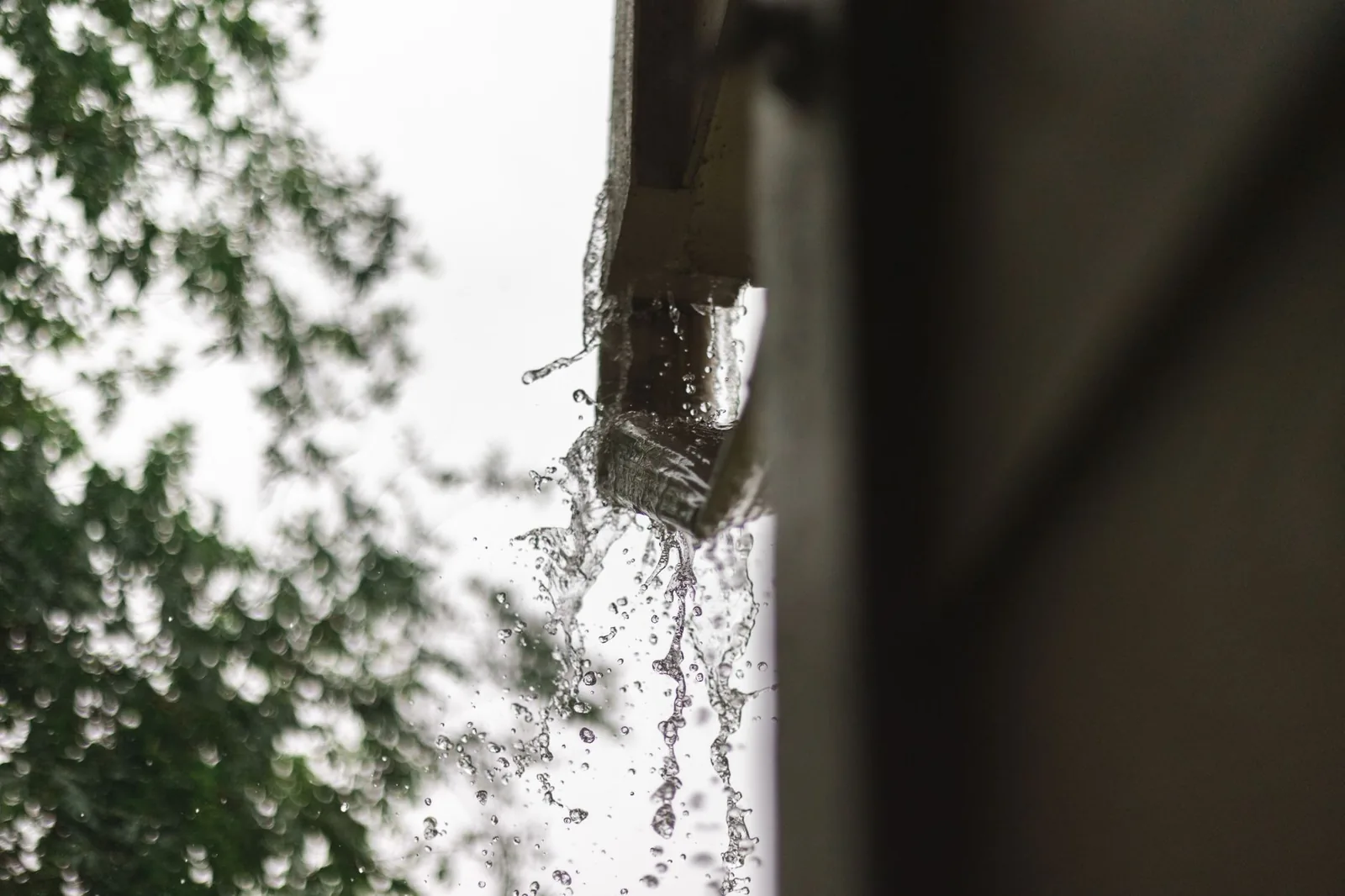
- Heavy rain can overshoot. Reverse-curve hoods in particular can shed fast-moving water over the nose during downpours instead of into the trough.
- They can hide problems. A guard makes it harder to spot a loose gutter, rust, or a leaking seam until it has already caused damage.
- Ice and snow affect cold climates. Guards can encourage ice dams in snow country in some configurations, so check the product’s cold-weather performance before buying.
- Warranties can conflict. Some mounting methods lift shingles, which can void a new shingle warranty. Confirm with both the guard installer and your roofer before committing.
When Gutter Guards Are and Aren’t Worth It
Rather than a blanket answer, here are the situations where guards earn their cost — and the ones where they don’t.
Worth it when:
– You have mature deciduous trees close to the house that drop leaves every fall.
– You pay for professional cleaning three or more times a year.
– Your home is two stories or has a steep or hard-to-reach roofline.
– You are replacing the roof or gutters anyway and can bundle installation.
Probably not worth it when:
– You clean your gutters yourself and live in a one-story home.
– Your roof is mostly clear of trees, or all nearby trees are pines and cedars dropping fine needles.
– Your budget is tight and gutter cleaning is only an annual nuisance.
If you do skip the guards, at least make the regular maintenance safer — this guide covers how to clean gutters safely with ladder, gloves, and position basics.
Frequently Asked Questions
Do gutter guards really work?
Yes, for the right debris. Quality micro-mesh and reverse-curve systems block leaves and twigs effectively and can cut cleaning frequency from several times a year to once every couple of years. They are far less effective against pine needles, shingle grit, and fine pollen, which pass through and still accumulate.
How much do gutter guards cost installed?
Most homes pay between $1,200 and $4,500 for professional installation, or roughly $8 to $30 per linear foot depending on the product. DIY materials run $150 to $800 for the same house but require working from a ladder across the full roofline.
Are gutter guards worth it if I don’t have many trees?
Usually not. The main payoff is reducing leaf and twig clogs, so a clear roofline removes most of the benefit. A light-duty screen or an annual cleaning is generally the better spend in that situation.
Do gutter guards void my roof warranty?
They can, in specific cases. Mounting methods that lift or penetrate shingles may void a shingle manufacturer’s warranty. Always check the guard’s mounting approach against your shingle warranty, and put any concerns in writing with the installer before the work begins.
How often do gutters with guards still need cleaning?
Plan on a cleaning every two to three years even with quality guards, since fine sediment still forms sludge. Homes under pine trees may still need yearly attention regardless of the guard style.
The Bottom Line
Gutter guards are worth it for a specific homeowner: someone with a tree-lined lot, a tall or awkward roofline, and a cleaning bill that arrives several times a year. For that person, a quality micro-mesh or reverse-curve system pays for itself within a few years and removes the most dangerous chore on the exterior maintenance list.
For everyone else, they are an optional upgrade rather than a necessity. The respected trade publications at This Old House and Bob Vila both frame guards as a convenience-plus-protection product — useful, but not a substitute for occasional upkeep. Match the product to your debris, check the warranty implications with your roofer, and get three quotes before you sign. If the math and the trees line up, guards are a genuinely sensible investment; if not, a solid ladder and a spring cleaning will do just fine.