Outdoor String Light Ideas: 12 Ways to Brighten Your Patio, Deck, and Pergola
Outdoor string light ideas are the cheapest way to make a backyard feel finished. A $25 strand of weatherproof bulbs hung over a patio does what a $3,000 hardscaping job does for atmosphere, minus the mess. It throws a warm, low pool of light that makes people want to stay outside an hour after the sun goes down.
The best part is that nearly every option is a weekend DIY project. You need four weatherproof hooks, an outdoor outlet or a heavy-duty extension cord, and about an hour of your time. No electrician, no permits, no trenching — just a ladder and a little patience.
Below, I’ll walk through ideas for patios, decks, pergolas, fences, and small yards, then cover what good string lights actually cost and how to hang them so they survive a storm.
Why String Lights Work Almost Everywhere
String lights get the job done because they define a space without building walls. A floodlight tells you what’s out there; a string of warm bulbs tells you where to sit. It’s soft, low-glare light in the 2700K range that flatters skin, food, and wood the way overhead fixtures never do.
They’re also the most forgiving fixture in the outdoor lighting toolbox. You can move them when you move the furniture, add a second strand next month, or take the whole setup down in twenty minutes when you sell the house. Built-in sconces and hardwired landscape lights can’t do that — once they’re in, they’re permanent, and they cost a lot more per lumen.
Efficiency is a bonus, not a selling point. A 25-bulb LED strand pulls around 25 watts total, compared with 125 watts or more for the same strand in incandescent bulbs. Over a summer of evening use, that’s the difference between cents and a few dollars a month on your electric bill.
Outdoor String Light Ideas for Every Zone
The same strand reads completely differently depending on where you put it. Here are eight placements that work in almost any yard, from a postage-stamp side lot to a half-acre backyard.
- Over a dining table. Run two parallel strands at seven feet so light falls on the table, not into eyes.
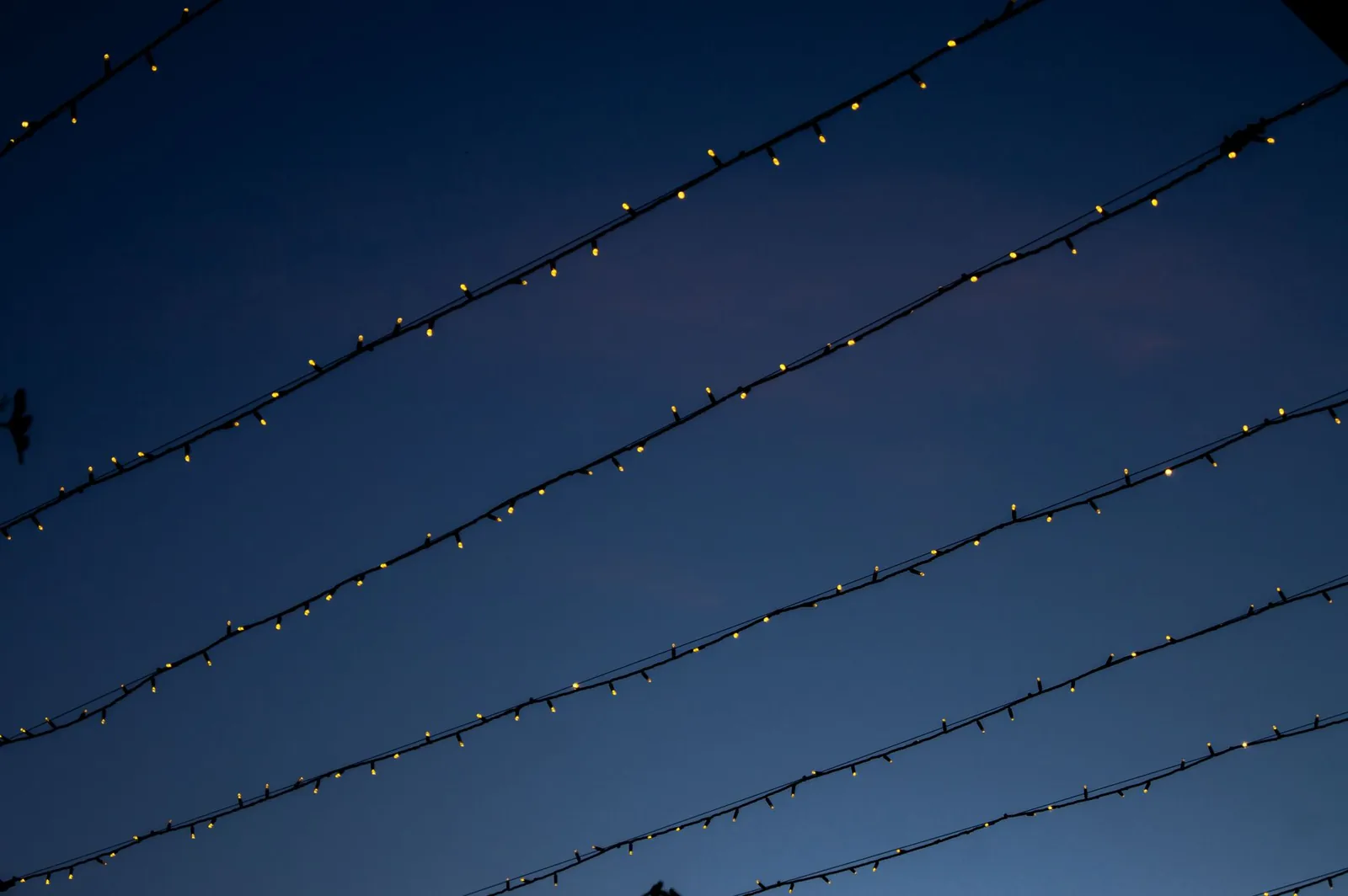
- Crisscrossed across a patio. Anchor four corners and cross the strands in an X or a tight zigzag for even coverage.
- Along a fence line. Clip a strand to the top rail to light a boundary without a single fixture box.
- Wrapped around a tree. Loop bulbs loosely around a low branch so they hang in soft arcs.
- Halo over a seating circle. Anchor hooks in a loose circle around Adirondack chairs or a fire pit.
- Down a garden path. Weave a strand between shepherd’s hooks to line a walkway with marker lights.
- Along a railing. Run the strand at handrail height to outline a deck’s edge at night.
- Under a deep roof eave. Mount hooks under a home’s front eave for a year-round porch glow.
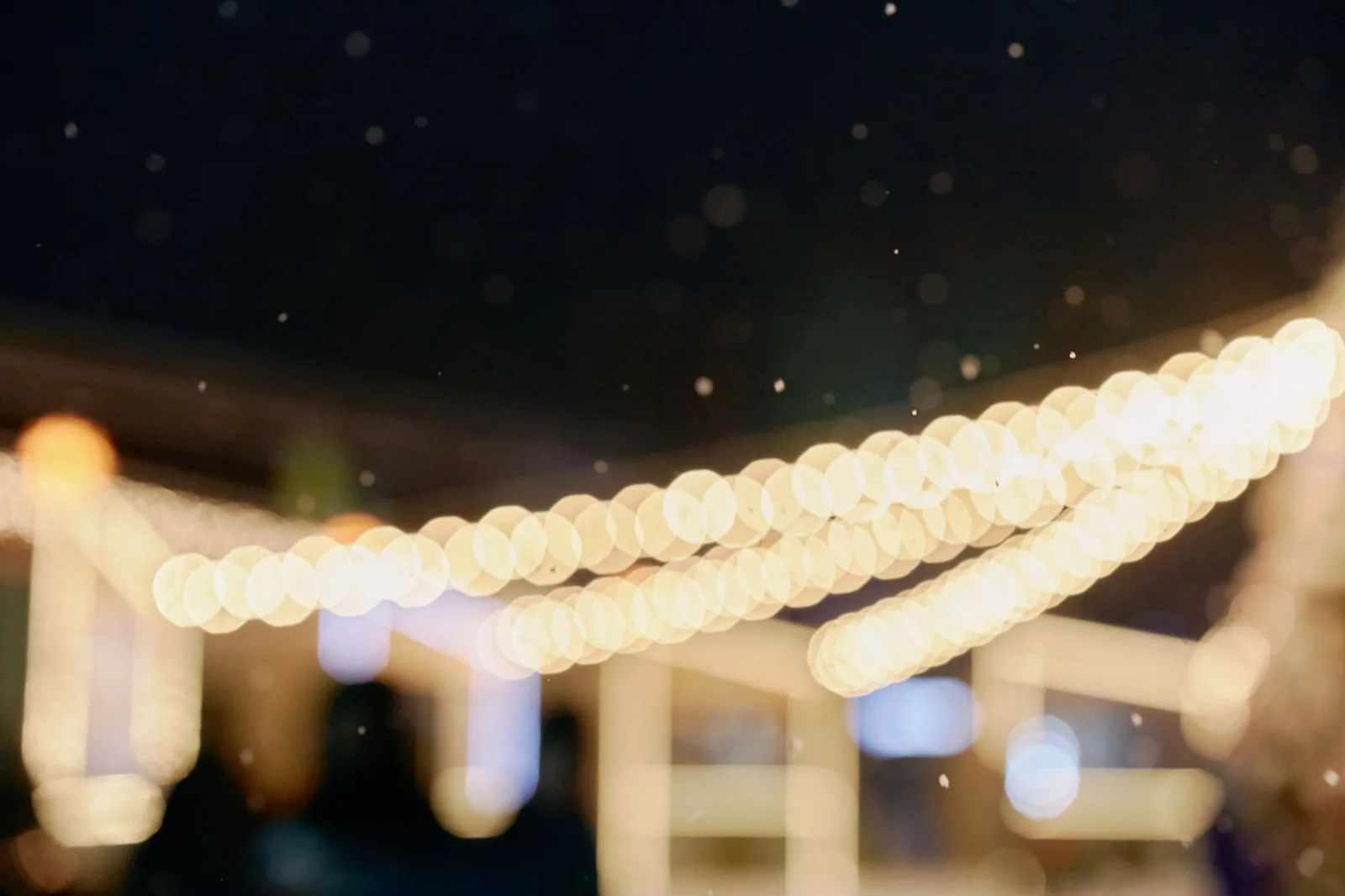
Photo by cottonbro studio via Pexels
String Light Ideas for a Covered Patio or Deck
A covered patio gives you the two things open-air string light setups struggle with: mounting points and protection from weather. If you have ceiling joists or a solid roof overhead, you can skip the poles entirely and hang lights permanently from cup hooks or eye screws.
The zigzag is the classic move here. Screw a hook into each corner of the ceiling, then run the strand back and forth across the space in two to three passes. The result is an even ceiling of light with zero glare and no visible power cable, since the cord sits above your head.
Decks without a roof need a different trick. Sink pressure-treated 4×4 posts at the outer corners — or use deck-mounted poles — and string a coated steel cable between them as a guide line. The bulbs hang from the cable instead of supporting their own weight, which is what keeps a long run from sagging into a drooping U-shape after a season. If you’re still deciding between a covered structure and a cheaper open deck, the trade-offs around cost are worth a look before you start drilling. Ready for more overhead cover? These covered patio ideas show how a roof changes what you can hang.
Pergola and Gazebo String Light Ideas
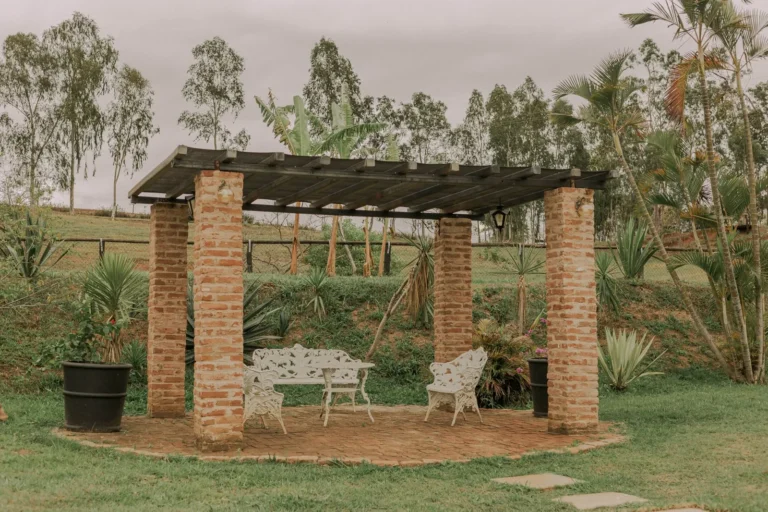
Pergola beams are basically built for string lights. The rafters give you a grid of mounting points every few feet, so you can run strands parallel to the beams, weave them in and out, or wrap individual beams for a tighter, more focused glow. Because the structure already holds the pattern, you don’t need a guide wire — just hooks or cable ties at even spacing.
A common pergola mistake is running lights too tight between beams. Leave a little slack in each span so the cord hangs in a gentle curve; pulled taut, the strand fights the beam spacing and looks rigid. If you’re still in the planning stage, some pergola ideas for backyards pair naturally with specific bulb patterns worth matching.
Gazebos and open pavilions work the same way, with one extra tip: on a screened gazebo, mount the strand to the frame rather than the screen, and keep bulbs from pressing against mesh that traps heat. For both structures, a heavy-duty outdoor strand rated IP65 — dust-tight and protected against low-pressure water jets — survives rain, sprinklers, and pressure washing without a hiccup.
Photo by Sergio Zhukov via Pexels
What Outdoor String Lights Cost
String lights are cheap at the entry level, but price climbs fast once you want smart controls, commercial-grade wire, or a lot of length. Here’s how the main options compare.
| Feature | Budget Strand (48 ft) | Mid-Range Globe (100 ft) | Smart LED (48–100 ft) | Commercial Grade (100 ft) |
|---|---|---|---|---|
| Typical cost | $15–$30 | $45–$80 | $50–$120 | $90–$250 |
| Bulb style | Mini or G40 globe | G40/G50 globe | Globe or Edison | Heavy-duty C9 or globe |
| Bulb spacing | 2–4 in (mini) or 12 in | 12–24 in | 12 in | 12–18 in |
| Weather rating | Often IP44 “(splash-proof)” | IP65 | IP65 | IP65, UV-rated |
| Extra features | None | Replaceable bulbs | App control, RGB, timers | Link up to 4–5 strands |
The sweet spot for most patios is a mid-range 100-foot globe strand around $60. It covers a 20-by-20-foot space in a zigzag without needing a second strand, and the replaceable bulbs mean a dead bulb is a $3 fix instead of a whole new purchase. Splurge only if you want color scenes and scheduling, which smart strands like Govee or Twinkly deliver for $50 to $120. If your ceiling or structure still needs work before you hang anything, the deck vs. patio cost breakdown helps you price the surface your lights will hang over.
Bulbs, Wire, and Power: What to Actually Buy
Three decisions matter more than brand, and none of them is hard.
Bulb type. G40 and G50 globes are the workhorse look for patios and pergolas. Edison-style filament bulbs read warmer and dressier, which suits a dining setup. Mini “fairy” lights pack tight spacing for railings and trees, while C9 bulbs throw bulkier, brighter light for large yards and rooflines. Family Handyman compares the common globe sizes side by side if you’re stuck between two looks.
LED over incandescent, always. An LED globe pulls under one watt and lasts 25,000 to 50,000 hours; an incandescent globe burns five to seven watts and dies in a year or two. The glow difference is negligible once you pick a 2700K warm-white LED.
Power and weather rating. Buy a strand labeled IP65 or “wet-rated” if it faces rain or sprinklers. Plug it into a GFCI outlet through an outdoor-rated extension cord — never a daisy chain of indoor cords — and check the strand’s maximum connectable length before linking a second one. Most budget strands max out at two or three connected, while commercial strands allow four or five.
Brands worth the money. Brightown and Addlon make dependable mid-range globe strands. Enbrighten sells durable, UV-rated “café” lights that hold up for years outdoors. If you want phone control, Govee and Twinkly add app scheduling and color scenes for a modest premium.
How to Hang String Lights So They Last
The difference between lights that look great for a decade and lights that sag by August is all in the mounting. Follow this order.
- Measure and mark. Sketch the pattern, then mark hook locations with spacing that matches the strand’s bulb spacing so bulbs sit evenly.
- Mount solid anchors first. Use stainless cup hooks or eye screws into wood beams, or masonry anchors into brick and stucco. Drywall anchors and command hooks will not hold outdoor weight.
- Add a guide wire for spans over 25 feet. Run 1/8-inch vinyl-coated steel cable between end anchors, then hang bulbs from it with carabiner clips or cable ties.
- Leave slack, not tension. Each span should curve slightly; a taut hot wire looks rigid and can snap when the weather swings.
- Plug safely. Route the cord away from walkways, cover the outlet connection with a weatherproof cap, and keep the plug off the ground on a stake or under an eave.
- Pick a smart or dimmer control. Even simple strands improve instantly on a dimmer, and a $15 mechanical timer means you never climb a ladder to turn them off.
One safety note worth repeating: never staple through the wire with a metal staple, keep bulbs off standing water and wet leaves, and use insulated hooks if the strand runs low enough to touch. The cost of doing it right is about ten dollars in hardware, and This Old House has a deeper walkthrough on outdoor electrical safety if you’re running a new outlet or switch.
Frequently Asked Questions
How many feet of string lights do I need for a 20×20-foot patio?
Plan for roughly twice your perimeter, not just the edges. A 20×20 patio has an 80-foot perimeter, and a simple two-pass zigzag across the ceiling uses close to 100 feet total. Measure your planned pattern with a cloth tape before you buy — most people under-order by a full strand.
Can outdoor string lights stay up year-round?
Wet-rated (IP65) strands can stay up through rain and sun, but snow, ice, and repeated freeze-thaw cycles shorten their life. North of the freeze line, most homeowners pull the strand down in late fall and rehang it in spring. It takes fifteen minutes and doubles the lifespan.
Do outdoor string lights use a lot of electricity?
No — LED strands barely register. A 25-bulb LED strand draws about 25 watts, roughly the same as two phone chargers. Run it five hours a night all summer and it adds around $1 to $2 to your electric bill. Incandescent strands cost five to seven times as much to run.
Can I connect multiple string light strands together?
Usually, but not always, and never beyond the limit printed on the tag. Budget strands typically allow two or three connected; heavy-duty commercial strands allow four or five. Exceeding the rating overheats the end-to-end connectors where fires actually start.
What’s the difference between indoor and outdoor string lights?
It’s all in weather protection. Outdoor strands add UV-stabilized cord, watertight bulb sockets, and a wet or splash rating (IP44 to IP65). Indoor strands have none of that and will corrode, short, or harden and crack within one season outside. Buy the outdoor version even for a covered porch — moisture reaches everything eventually.
The Bottom Line
Outdoor string light ideas don’t have to be complicated to be expensive-looking. A single $60 globe strand hung low over your table or crisscrossed under a pergola changes how a whole yard feels after dark, and it’s work you can finish before lunch on a Saturday.
Start with one quality wet-rated strand in a 2700K warm white, mount it right with stainless hardware and a guide wire on long spans, and only add smart controls if you’ll actually use them. Do that, and the same lights that cost you two hours and sixty dollars will still be the best feature of your backyard ten years from now.