Front Door Replacement Cost: A Complete 2026 Price Guide
The front door replacement cost most homeowners actually pay lands between $800 and $3,500, with a national average hovering around $2,000 for a mid-range steel or fiberglass door installed by a professional. At the low end, a basic steel slab swapped into an existing frame can run under $500. At the top, a custom solid-wood door with glass sidelights and a fresh frame regularly clears $6,000.
That spread exists because three things drive the number more than anything else: the material you pick, whether you replace just the door slab or the entire pre-hung unit, and how much extra work the doorway needs once the installer gets the old door off. This guide walks through each of those line items so you can compare bids with confidence.
Getting a handle on front door replacement cost before you request quotes puts you in a stronger negotiating position. It also keeps you from paying premium money for a door that looks sharp but under-delivers on insulation, security, and weather resistance.
What Influences Front Door Replacement Cost
Most homeowners expect the door itself to be the biggest expense, and it usually is. But it is rarely the only one, and the “small” items on a quote are where a $1,200 job quietly becomes a $2,800 job.
Material. Steel is the cheapest, fiberglass sits in the middle, and wood is the priciest. Within each material, brand matters too. A Therma-Tru fiberglass door costs more than a no-name import, but it also holds its finish longer and carries a stronger warranty.
Slab versus pre-hung. A slab is just the door leaf. It reuses your existing frame, jamb, and threshold, which trims $150 to $400 off the job. A pre-hung unit comes with the frame already assembled, which is what you need if the existing frame is rotted, out of square, or simply decades old.
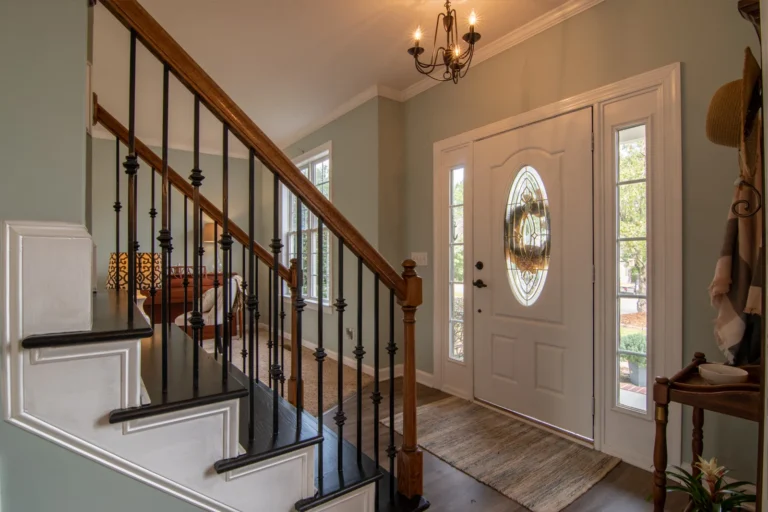
Glass and paneling. Decorative glass inserts, sidelights, and transoms add $250 to $1,500 or more. A plain six-panel door is cheap; a door with a full decorative glass lite is not.
Hardware and finishing. A new lockset, deadbolt, handle, and hinges add $100 to $400. Pre-finished doors cost more up front but skip the $150 to $300 a painter charges to prime and paint a bare door on site.
Permits and disposal. Most door replacements do not need a permit, but some municipalities require one when the rough opening changes. Haul-away of the old door usually runs $25 to $75.
Front Door Replacement Cost by Material
The single biggest decision is material, and the price difference between your options is stark. Here is how the three most common choices stack up.
| Feature | Steel | Fiberglass | Solid Wood |
|---|---|---|---|
| Typical installed cost | $600–$2,000 | $1,200–$3,500 | $1,500–$6,000+ |
| Insulation (R-value) | Low–moderate, foam core | High, foam core | Moderate–high |
| Durability | Dents, rusts if scratched | Very strong, no rust | Warps without maintenance |
| Maintenance | Repaint scratches quickly | Low; wipe clean | High; reseal yearly |
| Lifespan | 20–30 years | 30+ years | 30–100 years if cared for |
Photo by Henry De Leon via Pexels
Steel doors are the budget workhorse. A 24-gauge steel door with a foam core costs $150 to $500 on its own and installs for $600 to $2,000 total. They resist forced entry well and hold paint firmly, but a hard dent is hard to hide, and any scratch that reaches bare metal will rust if you do not touch it up.
Fiberglass doors are the sweet spot for most homeowners. They mimic the grain of wood convincingly, do not dent or rust, and carry foam cores with R-values that beat steel. Expect $400 to $1,200 for the door and $1,200 to $3,500 installed. If you are weighing options, our breakdown of fiberglass vs steel front doors goes deeper on the trade-offs.
Solid wood doors are the premium choice, prized for authenticity and repair-ability. Mahogany, oak, and knotty alder slabs start around $600 and climb fast; a full custom unit with a frame can hit $6,000 or more before installation. Wood warps and swells with moisture, so it demands a protective overhang and yearly resealing.
Labor Costs and Installation Factors
Labor for a front door replacement typically runs $300 to $800 for a straightforward swap and $800 to $1,500 or more when the installer has to reframe the opening. Contractors usually bid the job as a flat fee rather than an hourly rate, which makes comparing quotes easier if you know what the work includes.
Straight slab swap (1–3 hours). Pull the old door, hang the new one on existing hinges, adjust the strike plate. This is the cheapest install and works only when the frame is sound.
Pre-hung replacement (2–4 hours). Remove the old door and casing, set the new frame in the opening, shim it level, and re-insulate the gaps. Most replacements fall into this category.
Full reframe (half day to full day). If the rough opening is wrong, rotted, or the doorway needs resizing for a non-standard door, expect extra framing labor and potentially a permit.
Geography matters too. Labor in coastal metros runs 40% to 60% above the national average, while rural contractors in the Midwest and South frequently come in under it. Getting three written quotes almost always reveals a meaningful spread on the same door.
Extra Costs Homeowners Forget to Budget For
The door is rarely the whole bill. These add-ons catch first-time buyers off guard when the final invoice arrives.
Threshold and weatherstripping replacement. An adjustable aluminum threshold with a thermal break runs $60 to $180 installed. New weatherstripping is $30 to $80. Skipping these on an old doorway is a false economy, since a new door leaks air just like an old one if the seal is shot.
Rot repair. Water damage around the threshold and side jambs is common. Replacing a rotted section adds $200 to $600, and rot discovered mid-job is the single most frequent reason a quote goes up.
Sidelights and transoms. Adding or replacing sidelights costs $400 to $1,800 apiece and pushes both material and labor higher. If energy efficiency is the goal, you may also want to look at how the whole envelope performs, including the best windows for energy efficiency.
Smart locks and security hardware. A quality smart deadbolt runs $150 to $300 and many homeowners add one during a door project rather than retrofitting later.
Photo by Allyson SALNESS via Pexels
Doorbell, light fixtures, and trim. If the new door has a different thickness or style, existing trim, the doorbell, and exterior lighting often need reworking. Budget $100 to $300 for these small finishing touches.
How to Save on a New Front Door
You do not have to settle for a cheap door to keep the price down. Several moves trim the cost without trimming the quality.
Replace the slab, keep the frame. A healthy frame can save $150 to $400 versus a pre-hung replacement. Have a contractor confirm the frame is square and rot-free before you commit.
Choose a standard size. Doors that fit standard rough openings (36 by 80 inches is the workhorse) avoid custom fabrication charges that can add 30% to 50%.
Buy pre-finished. A factory finish costs more than a bare door but typically less than priming and painting on site, and it usually carries a longer warranty.
Do the demo yourself. Tearing out the old door, hauling it away, and prepping the opening is grunt work most able-bodied homeowners can handle, and it can knock $100 to $200 off the labor line.
Time the season. Demand for exterior door work peaks in spring and fall. Scheduling in late fall or winter sometimes lands a discount, and materials prices tend to be calmer.
Bundle the project. If you are planning other exterior work, contractors often cut per-unit pricing when a door is quoted alongside projects like a window replacement. The crew is already on site, which trims mobilization costs.
Frequently Asked Questions
How much does it cost to replace a front door including labor?
Most homeowners pay $800 to $3,500 total, with a national average near $2,000. A basic steel slab can be installed for under $600, while a custom wood door with a new frame and sidelights runs $6,000 or more.
Is it cheaper to replace just the door or the whole frame?
Replacing just the slab is cheaper, typically by $150 to $400, because the frame, trim, and threshold stay in place. But if the frame is rotted, out of level, or damaged, a pre-hung replacement is the right call and costs less over time.
How long does a front door replacement take?
A straight slab swap takes one to three hours. A pre-hung replacement runs two to four hours. A full reframe with rot repair and new trim can take a full day or more, spread across rough and finish carpentry.
What is the best front door material for the money?
Fiberglass offers the best balance for most climates. It insulates better than steel, resists denting and rust, and needs almost no maintenance, all at a mid-range price. Steel wins on pure upfront cost, and wood wins on authenticity if you will maintain it.
Does a new front door increase home value?
Yes. A new steel entry door consistently ranks among the highest cost recoups in renovation surveys — frequently 60% to 90% on resale, according to cost-versus-value data, because it improves curb appeal, security, and perceived energy efficiency at the same time.
The Bottom Line
Front door replacement cost is best understood as a range you control rather than a fixed number. Budget $800 to $3,500 for a typical professional installation, with the material you choose doing most of the work to move you up or down that band. Steel keeps the price low, fiberglass delivers the best value for most homes, and wood rewards buyers who want authenticity and are willing to maintain it.
The most expensive mistakes are the ones you do not see coming: rotted framing found mid-job, a non-standard rough opening, or a cheap door underperforming on insulation so you keep paying on energy bills. Get three written quotes that itemize material, slab versus pre-hung, hardware, and any rot repair, and compare them line by line. This Old House publishes a useful checklist before you buy, and the U.S. Department of Energy explains how Energy Star-rated doors reduce air leakage in any climate.
A front door is the first thing visitors see and the last barrier against the weather. Spend thoughtfully on the material and the seal, and the door will pay for itself in comfort, security, and resale appeal long before it needs replacing again.