Fiberglass vs Steel Front Door: Which Entry Door Is Right for Your Home?
If you’re replacing an entry door, the fiberglass vs steel front door decision comes down to three questions: what you’ll pay, how much abuse the door has to absorb, and the look you want from the curb. Both materials beat the tired wood door they typically replace, but they fail in different ways. Steel dents, scratches, and eventually rusts. Fiberglass costs more upfront and can fade after years of harsh sun. Neither is the wrong answer — you just have to match the material to your climate, your curb appeal goals, and how much maintenance you’re willing to do.
Here’s the short version. Fiberglass wins on looks, low maintenance, and coastal or mixed-climate performance. Steel wins on price and raw impact resistance. This guide breaks down real installed costs, durability, energy performance, and design options so you can choose without overspending.
Fiberglass vs Steel Front Door: A Quick Comparison
Before digging into the details, here’s how the two materials stack up side by side across the factors homeowners actually care about.
| Feature | Fiberglass Front Door | Steel Front Door |
|---|---|---|
| Typical cost (installed) | $1,200–$3,500+ | $800–$2,000 |
| Lifespan | 30+ years | 15–30 years (shorter if it rusts) |
| Dent resistance | High | Low — dents and is hard to repair |
| Rust and scratch risk | Near zero | High without prompt repainting |
| Insulation | Very good (foam core) | Good (foam core, can “sweat”) |
| Wood-grain realism | Excellent | Poor — faint embossing only |
| Weight | Medium (100–130 lb) | Heavy (150+ lb) |
| Best for | Coastal, sun, mixed climates | Tight budget, maximum security |
In short, fiberglass costs more and does more. Steel is the pragmatic, budget-friendly choice that still outperforms old wood in every functional way.
Cost: What You’ll Actually Pay
Steel is almost always the cheaper door, and the gap widens once you add decorative glass and a high-end finish. A basic prehung 26-gauge steel door from a big-box store — brands like Jeld-Wen and Masonite dominate this segment — runs roughly $400 to $700 for the slab alone. Pay a contractor to remove the old door, frame it out, and install the new one, and the total typically lands between $800 and $1,200. Opt for thicker 24-gauge steel or a door with lites and sidelights from ProVia, and you’ll climb toward $1,500 to $2,000.
Fiberglass starts higher and scales from there. A solid entry-level fiberglass slab runs $500 to $900, with professional installation pushing the job to $1,200 to $1,800. Move into premium territory — a Therma-Tru Fiber-Classic, a ProVia Signet, or a Pella or Andersen fiberglass door with a real wood-grain texture and decorative glass — and installed prices routinely land between $2,500 and $4,500. That premium buys you a door that looks like solid wood but won’t warp, crack, or require the upkeep wood demands.
One number people forget is labor. Neither fiberglass nor steel changes the installation cost much — the framing, shimming, and trim work is the same. You’ll spend more on a fully front door replacement project because of the surrounding work and, often, a new storm door, not because the material itself is inherently expensive to hang.
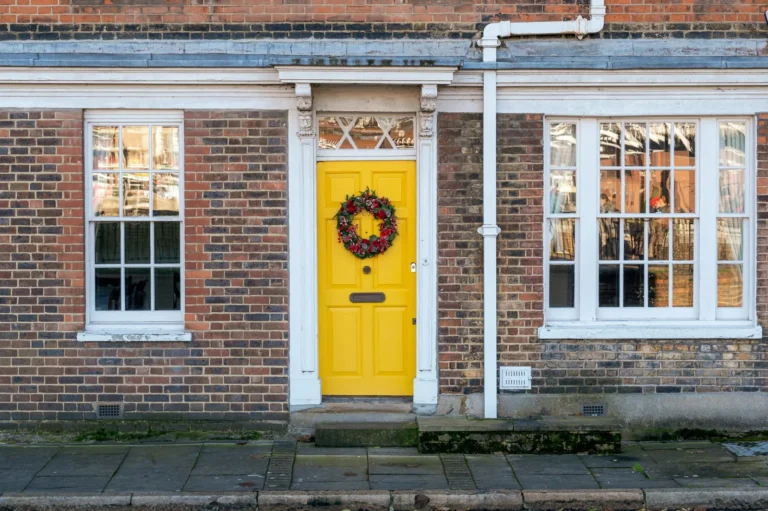
Photo by Luis Quintero via Pexels
Durability and Maintenance
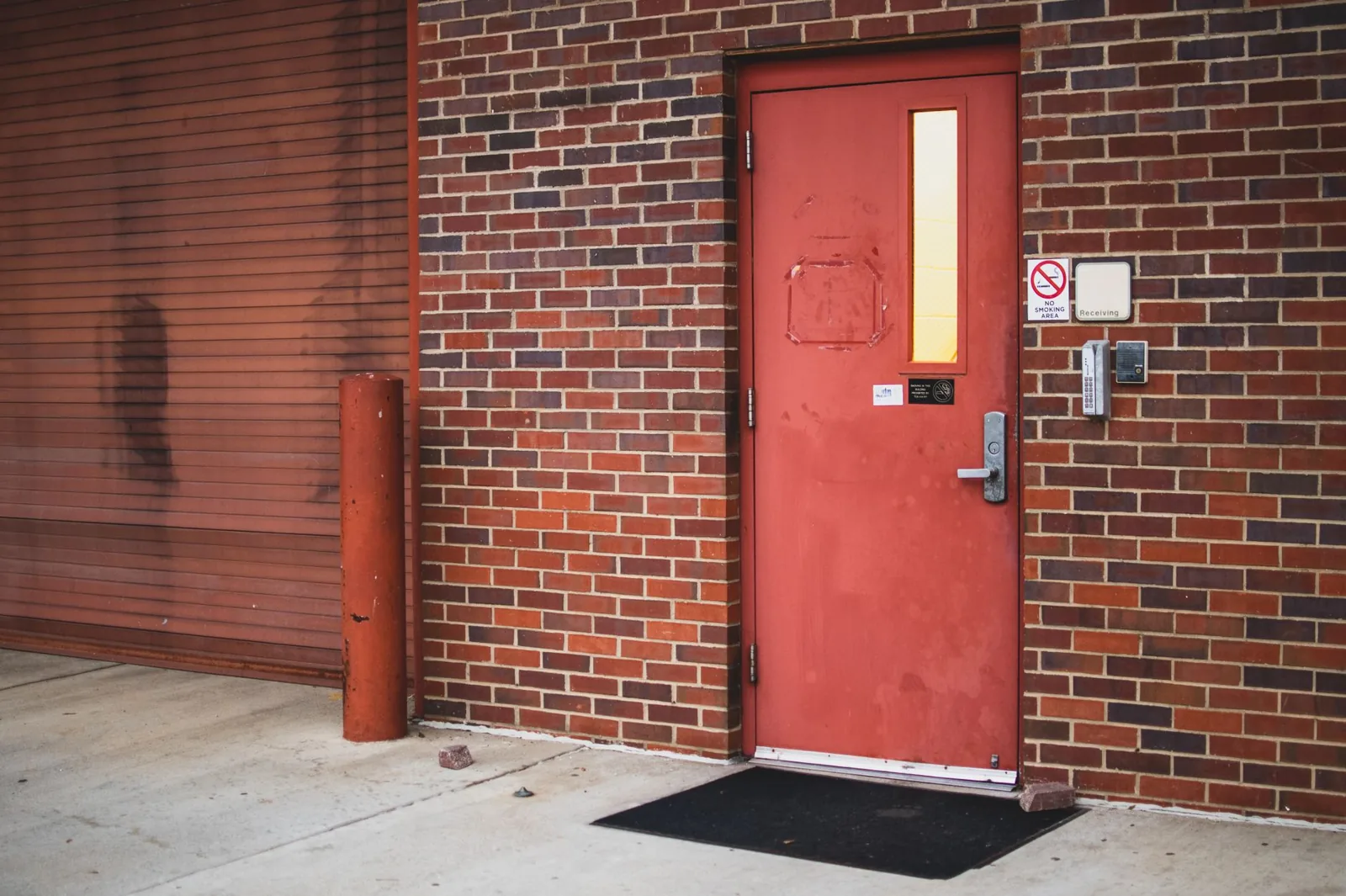
This is where the two materials split hardest. A steel door is tough until something strikes it — then it isn’t. A misplaced ladder, a hard kick, a child’s bike handlebar, even a heavy rock thrown by a mower will leave a visible dent in most residential steel doors. Those dents don’t pop out the way an auto-body dent can, so you’re usually looking at filling, sanding, and repainting a panel that will never quite match. Worse, any scratch that breaks the paint film exposes bare steel, and once moisture reaches it, rust starts. Touch up even small scratches quickly and repaint every few years, and a quality steel door can still last 15 to 30 years.
Fiberglass doesn’t dent, doesn’t rust, and doesn’t care about humidity or salt air. The trade-off is cosmetic over the long run: a fiberglass door in full afternoon sun can fade slightly over a decade, and you’ll want to repaint it periodically anyway to keep the finish even. You can’t dent it, but you also can’t fix damage invisibly if someone does manage to crack the skin — repair usually means replacing the panel. For most homeowners, fiberglass is the closest thing to a “set and forget” front door on the market.
Energy Efficiency and Insulation
Both doors are dramatically better than old wood here, but fiberglass holds a real edge in extreme climates. Most quality steel and fiberglass entry doors are built around a solid polyurethane foam core, which gives them an insulating value of roughly R-5 to R-6 — far beyond the R-1 to R-2 you’d get from a hollow or aging wood door.
The difference is the skin. Steel is highly conductive, so in a cold winter the interior face of a steel door can get cold enough to collect condensation, especially if the door lacks a proper thermal break and quality weatherstripping. That “sweating” can drip onto flooring and, left unchecked, encourage mildew on the frame. Fiberglass is a poor conductor, so its interior face stays closer to room temperature and resists condensation. If you live in a cold state or struggle with a drafty entry, the extra insulation and warmer interior surface of fiberglass is a meaningful comfort upgrade — this is also why energy-efficient entries often get paired with better-insulated windows when homeowners tackle the whole front of the house. The Department of Energy’s guidance on selecting energy-efficient doors is worth a quick read before you buy either.
Photo by Timothy Huliselan via Pexels
Appearance and Design Flexibility
If curb appeal drives your decision, fiberglass wins and it isn’t close. Modern fiberglass doors are cast from molds taken from real oak, mahogany, and fir, so the grain isn’t just printed on — it has actual depth you can feel. Top lines like the Therma-Tru Fiber-Classic and ProVia Signet are nearly indistinguishable from solid wood at arm’s length. Stainable fiberglass takes a gel stain that sits in the grain, giving you the look of stained mahogany without the warping, cracking, or price of the real thing.
Steel doors can’t match that. Their wood-grain texture is a faint embossing stamped into the metal, and it reads as painted metal the moment you get close. They can look crisp in a modern or farmhouse exterior with a smooth, saturated paint finish, but you’re not fooling anyone into thinking it’s wood.
Both materials accept paint well and both can be ordered with decorative glass, sidelights, and transoms. The difference is that fiberglass gives you a realistic wood aesthetic and holds detail better, while steel is best treated as a clean, painted surface. If you’re also updating the windows around your entry, matching the style of casement versus double-hung windows to your new door’s look keeps the facade cohesive.
Security and Impact Resistance
Steel remains the go-to answer when a homeowner’s top priority is resisting forced entry. A 24-gauge steel door backed by a foam core is genuinely difficult to kick through, and paired with a quality deadbolt and a reinforced strike plate, it’s about as secure an entry as a residential door gets. That’s why steel is the default in many rental units and high-burglary neighborhoods.
Fiberglass is no pushover. A quality fiberglass door is rigid, dense, and resists both dents and hard blows well — and because it won’t dent from day-to-day impacts, it keeps looking good while taking abuse. For true forced-entry protection, though, steel’s thicker skin has the harder, more rigid surface. In practice, the lock, the strike plate, the hinges, and the frame matter as much as the slab; a pro-grade deadbolt and reinforced hardware on either door will stop far more threats than the choice of skin material.
Frequently Asked Questions
Which front door lasts longer, fiberglass or steel?
Fiberglass typically lasts longer — 30 years or more with occasional repainting — because it doesn’t rust, dent, or corrode. A well-maintained steel door can reach 15 to 30 years, but its lifespan depends on how quickly you touch up scratches and repaint before rust takes hold.
Is a fiberglass front door worth the extra money?
For most homeowners, yes. The premium buys a realistic wood look, near-zero maintenance, dent resistance, and better cold-weather comfort. If you’re on a tight budget or prioritize security over curb appeal, steel remains a smart value.
Do steel front doors rust?
They can. Steel doors only rust where the paint film is breached and bare metal meets moisture. Promptly touching up scratches and dents and repainting every few years prevents rust; neglect it, and rust follows — especially near the bottom edge and threshold.
Can you paint a fiberglass front door?
Yes, and it’s one of the material’s strengths. Fiberglass accepts exterior-grade latex or acrylic paints well, and stainable fiberglass can be gel-stained to mimic real wood. Just avoid dark colors on a south-facing door in hot climates, which can cause premature fading.
Which door is better for storm or coastal climates?
Fiberglass. It won’t rust in salt air, won’t warp in humidity, and its poor heat conduction keeps the interior face from sweating. If a coastal or high-humidity climate is your reality, fiberglass is the safer long-term investment.
The Bottom Line
Pick steel when budget and security lead the list — you’ll get an affordable, genuinely strong door that outperforms old wood in every functional way, as long as you’re willing to maintain the paint. Pick fiberglass when you want a low-maintenance, dent-proof door that looks like solid wood and holds up in harsh or coastal weather, and you’re comfortable paying more upfront for it.
Either way, the door is only half the job. Pair whatever you choose with quality weatherstripping, a reinforced strike plate, and a properly fitted frame, and you’ll get decades out of an entry you walk through every day. If you’re ready to move past the fiberglass vs steel front door decision, get two or three installed quotes with the same glass and hardware specified so you can compare numbers that are actually alike.