Standing Seam Metal Roof Cost: What You’ll Actually Pay in 2026
The standing seam metal roof cost is one of the most asked-about numbers in home improvement, and for good reason: it is the single biggest line item in a roof replacement, and the quoted range is wide enough to make anyone nervous. Most homeowners can expect to pay between $9 and $14 per square foot installed, which translates to roughly $25,000 to $45,000 for a typical 2,500-square-foot American home. On the low end, a straightforward gable roof with standard steel panels can come in around $9,000; a complex roof in copper or zinc can push past $100,000.
That spread isn’t salesperson noise. It reflects real differences in metal gauge, finish, panel profile, and how hard your roof is to work on. This guide breaks down exactly what you’re paying for, what a fair quote looks like, and where the money goes over the life of the roof.
Here’s the short version: standing seam costs roughly two to three times what a comparable asphalt shingle roof does, but it also lasts two to three times longer and needs almost no maintenance. Whether that trade makes sense for your house usually comes down to how long you plan to stay.
How Much Does a Standing Seam Metal Roof Cost?
Photo by Jan van der Wolf via Pexels
The national average for a standing seam metal roof sits around $12 per square foot for materials and installation together. That works out to about $24,000 for a 2,000-square-foot roof, $30,000 for 2,500 square feet, and $48,000 for 4,000 square feet. These are complete-installed figures, not materials-only.
Here’s how the average quote breaks down by component:
- Metal panels — $4 to $7 per square foot. Steel panels run $4 to $6; aluminum sits around $5 to $8; zinc starts near $10; copper can reach $20 or more.
- Labor — $5 to $7 per square foot. Standing seam is specialized work that requires trained crews and a roll-forming machine or pre-cut panels.
- Trim, flashing, and clips — $1.50 to $3 per square foot. Ridge caps, gable trim, valleys, and the concealed clips that hold the panels all add up.
- Underlayment — $0.50 to $1 per square foot. A high-temperature synthetic underlayment is standard under metal.
Cost by Roof Size
| Roof Size | Low Estimate | Average | High Estimate |
|---|---|---|---|
| 1,200 sq ft | $10,800 | $14,400 | $16,800 |
| 2,000 sq ft | $18,000 | $24,000 | $27,500 |
| 2,500 sq ft | $22,500 | $30,000 | $36,000 |
| 3,500 sq ft | $31,500 | $42,000 | $49,000 |
These numbers assume a standard 24-gauge steel panel in a common color. Every variable below moves the needle.
What Drives the Standing Seam Metal Roof Cost
Metal Gauge and Material
Steel is the workhorse of residential standing seam, and gauge matters more than most homeowners realize. 24-gauge is the industry standard and what most estimates assume. Thicker 22-gauge panels cost 10% to 15% more but resist denting better in hail-prone regions. Anything thinner, like 29-gauge, should be avoided on a house—it’s marketed for agricultural buildings and can oil-can (show visible waves) on open roofs.
Material choice changes the price dramatically:
- Galvanized steel (24-gauge) is the budget option, at $9 to $11 per square foot installed.
- Galvalume steel adds a zinc-aluminum coating for corrosion resistance, at $10 to $13.
- Aluminum is the standard near saltwater coasts, at $11 to $15.
- Zinc offers a self-healing patina and century lifespan, at $15 to $25.
- Copper is the premium choice, at $20 to $35 and up.
Roof Complexity
Standing seam pricing is heavily shaped by how many cuts and details the crew has to make. A simple two-plane gable is the cheapest shape to metal. Add dormers, valleys, chimneys, skylights, or a steep pitch, and labor climbs fast because every penetration needs custom trim and a hand-measured panel.
Pitch matters on both ends. A very steep roof (8/12 or higher) requires safety harnesses and slows the crew down. A nearly flat roof (below 2/12) requires additional sealing and sometimes a different clip system. The sweet spot for cost is a moderate 4/12 to 6/12 roof with few penetrations.
Finish and Coatings
The paint system is baked onto the panel at the factory, and it’s where a lot of the price difference hides. Entry-level panels use a standard polyester coating. Premium panels use a PVDF finish—the Kynar 500 and Hylar 5000 families—which resists fading and chalking for decades. PVDF adds roughly $0.50 to $1.50 per square foot, and it’s worth it on a south-facing roof in a hot climate. Solar-reflective “cool roof” coatings can also lower your cooling bill and may qualify for utility rebates.
Standing Seam vs. Other Roofing Options
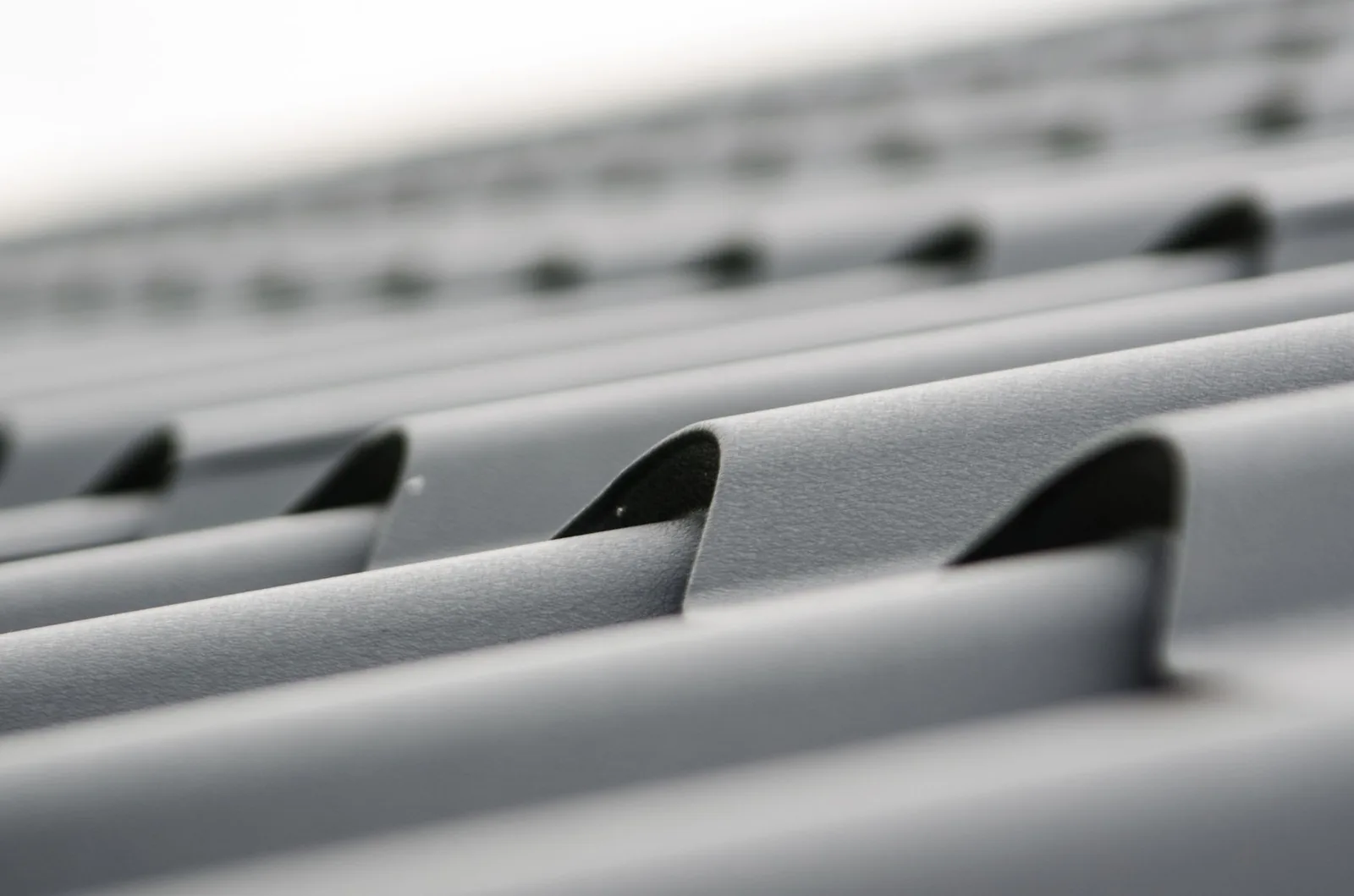
Photo by Pixabay via Pexels
The clearest way to judge the standing seam metal roof cost is against what you’d pay for other materials on the same house. Asphalt shingles are the benchmark most homeowners measure against, but they’re not the only alternative.
| Feature | Standing Seam Metal | Asphalt Shingles | Architectural Shingles |
|---|---|---|---|
| Installed cost (avg) | $12/sq ft | $4–$6/sq ft | $5–$8/sq ft |
| Lifespan | 40–70 years | 15–25 years | 25–30 years |
| Maintenance | Minimal | Occasional repair | Occasional repair |
| Hail/wind resistance | High (140 mph rated) | Moderate | Moderate |
| Energy efficiency | Reflective options | Low | Low |
| Tear-off and disposal | Lighter, less waste | Heavy, landfill-bound | Heavy, landfill-bound |
The comparison that trips up most buyers is simple math: metal costs two to three times more upfront but outlasts asphalt by roughly three to one. If a $10,000 shingle roof lasts 22 years and a $27,500 metal roof lasts 50, the metal roof is actually cheaper per year of service—and that’s before you factor in avoided re-roofing labor, which tends to rise faster than general inflation.
For a deeper breakdown of the two, see our metal roof vs. shingles cost comparison and our guide to what a roof replacement costs end to end.
Don’t Skip the Tear-Off Question
One detail that changes the standing seam metal roof cost more than people expect is whether your old roof comes off first. Building codes in most areas allow metal roofing to be installed directly over a single existing layer of asphalt shingles, and skipping the tear-off can save $1.50 to $3 per square foot.
It’s not always the right call. Installing over old shingles hides deck rot, traps heat against the shingle layer, and can shorten the underlayment’s life in hot climates. Most reputable contractors in warm regions recommend a full tear-off so the deck can be inspected and repaired before metal goes down. In cooler climates, where the trapped-heat concern is smaller, a direct-over install is more common.
Get this item spelled out line by line in your quote. Two contractors bidding the “same” roof can be $6,000 apart simply because one included a tear-off, new underlayment, and decking repairs and the other didn’t.
The Long-Term Math: Is It Worth It?
The honest answer is that it depends on how long you’ll own the home. If you plan to stay for 20 or 30 years, a standing seam roof will likely be the last roof you ever buy, and the lifetime cost advantage is real. If you’re selling in five years, you’ll recover some of the cost through resale value—metal roofing consistently earns a roughly 60% to 68% return on investment in national real estate surveys—but you’ll pay a lot more upfront than a shingle home next door.
There are also quieter savings to count:
- Lower cooling bills from reflective, light-colored panels.
- No recurring repair calls after hail or wind events.
- Insurance discounts offered by many carriers for impact-resistant roofing.
- No asphalt shingle waste going to landfill at replacement time.
None of these erase the higher upfront price, but together they close the gap meaningfully over a long ownership window. To see how these trade-offs compare across materials, our asphalt shingle types comparison lays out the alternatives side by side.
How to Get a Fair Quote
The fastest way to overpay is to collect a single quote and accept it. Get at least three, ideally from contractors who specialize in metal roofing rather than shingle crews that occasionally do metal. A few questions to put in front of every bidder:
- What gauge and profile are you quoting? Insist on 24-gauge minimum for steel.
- Is tear-off and disposal included, or is this an over-install?
- What finish is on the panels? Ask for PVDF by name if the roof is highly visible or sun-exposed.
- Who manufactures the panels—and is the coil metal sourced domestically?
- Is the warranty split, and what does it actually cover? A 40-year “paint warranty” is not the same as a workmanship warranty.
- What’s the price per square foot, broken out? A contractor who won’t show this breakdown is usually padding somewhere.
Beware of quotes that look dramatically cheaper than the market. A standing seam roof quoted at $6 per square foot is almost certainly using the wrong panel type, thin-gauge metal, or an under-the-table crew—all of which will cost you on the back end.
Frequently Asked Questions
How much does a standing seam metal roof cost per square foot?
Plan on $9 to $14 per square foot installed. Standard 24-gauge steel in a common color lands near $12 per square foot on a typical residential roof. Copper and zinc run significantly higher.
How long does a standing seam metal roof last?
A properly installed steel standing seam roof lasts 40 to 70 years, and the PVDF paint system often carries a 30-year fade warranty. Aluminum and zinc last longer; copper can exceed 100 years. We cover roof longevity in detail in our guide on how long a roof lasts.
Is a standing seam metal roof worth the extra cost?
For a long-term homeowner, usually yes. It lasts around three times as long as asphalt shingles, needs almost no maintenance, resists hail and high wind, and earns a strong return on investment at resale—while costing roughly two to three times more upfront.
Can a metal roof be installed over existing shingles?
Yes, in most jurisdictions a single layer of shingles can stay under the metal. It saves money, but it hides deck damage and can shorten underlayment life in hot climates. A full tear-off is the better path in warm regions.
Does a metal roof add to home resale value?
Metal roofing regularly tops home-improvement cost-vs-value surveys, with a typical return of 60% to 68% at resale. It’s also a strong selling point for buyers concerned about storm durability and future replacement costs.
The Department of Energy’s metal roofing section covers the cool-roof benefits of coated standing-seam panels.
The Bottom Line
The standing seam metal roof cost—roughly $9 to $14 per square foot, or $25,000 to $45,000 for the average home—is high enough to deserve real research, not a quick decision. But it’s also one of the few roofing choices where paying more upfront genuinely buys you fewer problems for the next several decades. No maintenance cycles, no tear-offs every 15 to 25 years, and a roof that shrugs off the weather that kills shingle roofs.
Your job is to make sure the quote reflects standard materials and honest scope. Insist on 24-gauge steel, a named finish, a line-item breakdown, and contractors who do metal roofing day in and day out. Get three bids, compare them point by point, and go with the crew you trust to be around for the workmanship warranty—because with this material, you should be measuring the roof’s life in decades, not years.