Skylight Installation Cost: 2026 Pricing Guide for Homeowners
A skylight turns a dim hallway or cramped kitchen into the brightest room in the house, but before you call a roofer, you want a straight answer on skylight installation cost. In 2026, most homeowners pay between $1,600 and $5,000 for a single professionally installed skylight, with a typical job landing around $2,800. A basic tubular skylight runs closer to $800, while a large vented unit set into a steep roof can push past $6,500.
The range is wide because a skylight is really two purchases at once: the unit itself and the roofing work required to cut, frame, flash, and seal it. Get both numbers right and you avoid leaks, drafts, and a surprise invoice. Here is exactly where the money goes and how to budget for your own project.
What Is the Average Skylight Installation Cost?
Across the United States, the national average skylight installation cost sits between $1,600 and $5,000, with a median of roughly $2,700 reported across homeowner surveys. The single biggest swing factor is the type of skylight you choose: a fixed unit costs far less to buy and install than a motorized, vented model, and a tubular “sun tube” is cheaper still.
Where you live matters too. Installers in high-cost metros such as San Francisco, New York, and Seattle often bid 20% to 40% above the national average, while jobs in the rural South and Midwest regularly come in under $2,000. Labor rates, permit fees, and roof pitch all move the number, so treating any single national figure as gospel is a mistake.
Most contractors price the job as unit cost plus labor. A mid-range fixed skylight from Velux, the dominant manufacturer in the category, retails for $400 to $900, while labor for a straightforward roof cut typically adds $500 to $1,000. The moment you move to a solar-powered venting skylight or a custom curb-mount installation, the total climbs quickly.
Skylight Installation Cost by Type
The type of skylight you install is the largest single driver of your final price. Here is what each category typically costs when you account for both the unit and a professional install.
Fixed Skylights
A fixed skylight does not open. It simply admits light, which keeps both the unit cost and the installation simple. Expect $1,200 to $3,000 installed for a standard 24-by-48-inch unit. Fixed models are the best value for hallways, stairwells, and rooms with high ceilings where ventilation is not a priority.
Vented Skylights
Vented (or “venting”) skylights open to release warm air and moisture, making them the right choice for kitchens, bathrooms, and attics. Manual crank models start around $1,800 installed; electric and solar-powered units from Velux and Fakro typically run $2,500 to $4,500. The extra spend buys a moving sash, a crank or motor, and a more involved flashing and sealing system.
Tubular Skylights
Tubular skylights — also called sun tunnels or light tubes — pipe daylight through a small, highly reflective tube that fits between rafters. Velux Sun Tunnel kits and Solatube systems cost $250 to $600 for the hardware, and full installation usually lands between $800 and $1,800. They are the least expensive way to add daylight to a closet, bathroom, or hallway where a full-sized skylight would not fit.
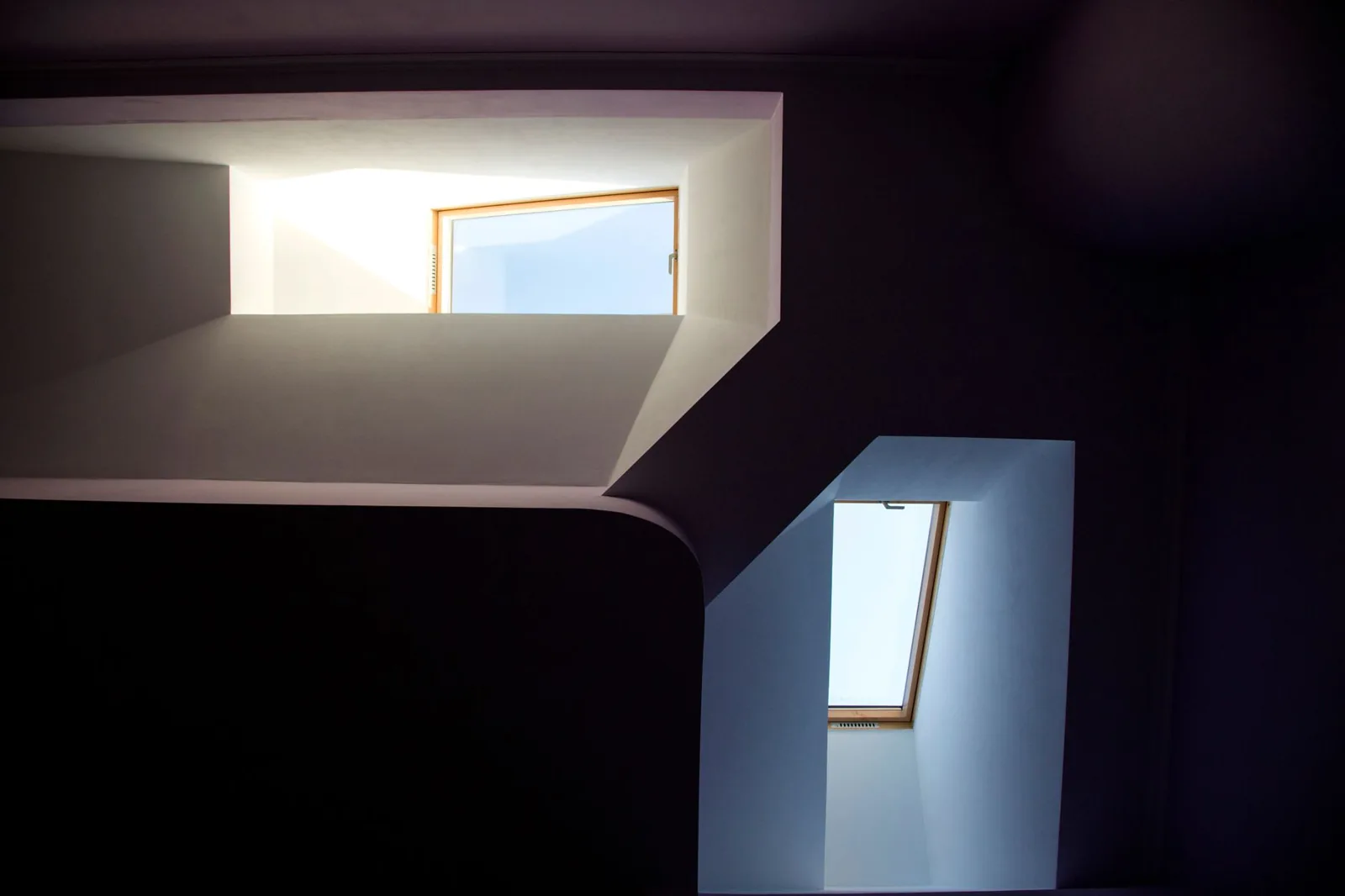
Photo by Valentin Ivantsov via Pexels
Fixed vs. Vented vs. Tubular: A Cost Comparison
Because skylight prices vary so much by style, it pays to lay the three main options side by side before you commit.
| Feature | Fixed Skylight | Vented Skylight | Tubular Skylight |
|---|---|---|---|
| Typical installed cost | $1,200–$3,000 | $1,800–$4,500 | $800–$1,800 |
| Ventilation | None | Manual or motorized | None |
| Best for | Hallways, stairwells, high ceilings | Kitchens, bathrooms, attics | Closets, small rooms, tight roof space |
| Light output | High | High | Moderate, diffused |
| Install complexity | Low to moderate | Moderate to high | Low |
For most homeowners, a fixed skylight delivers the best dollars-per-lumen value, while a vented model is worth the premium only where moisture is a genuine concern — think bathrooms and kitchens that already struggle with humidity.
Labor Costs and What Affects the Quote
Labor for a skylight typically accounts for 40% to 60% of the total job. A trained roofer charges between $60 and $100 per hour, and a single-skylight install usually takes half a day to a full day once you factor in cutting the opening, building the curb or frame, laying the flashing, and sealing everything tight.
Several conditions push labor higher, and each one should be spelled out on your quote.
- Roof pitch. A steep roof (above 6:12) requires scaffolding or roof jacks and slows the crew down. Expect to pay 20% to 40% more.
- Roof material. Cutting through slate, tile, or metal costs more than cutting asphalt shingles. Tile roofs alone can add $300 to $600 in material handling.
- Access and interior finish. Skylights in second-story or hard-to-reach locations, or those that require drywall and trim work inside, add $200 to $800.
- Structural changes. If the skylight is wider than the space between rafters (most rafters sit 16 or 24 inches on center), the installer must cut a rafter and add headers — an extra $300 to $900.
Always confirm whether the quote includes the interior “light shaft” finish. Some roofers stop at the roof deck, and you will need a drywall crew or handyman to finish the tunnel at $300 to $1,000 more.
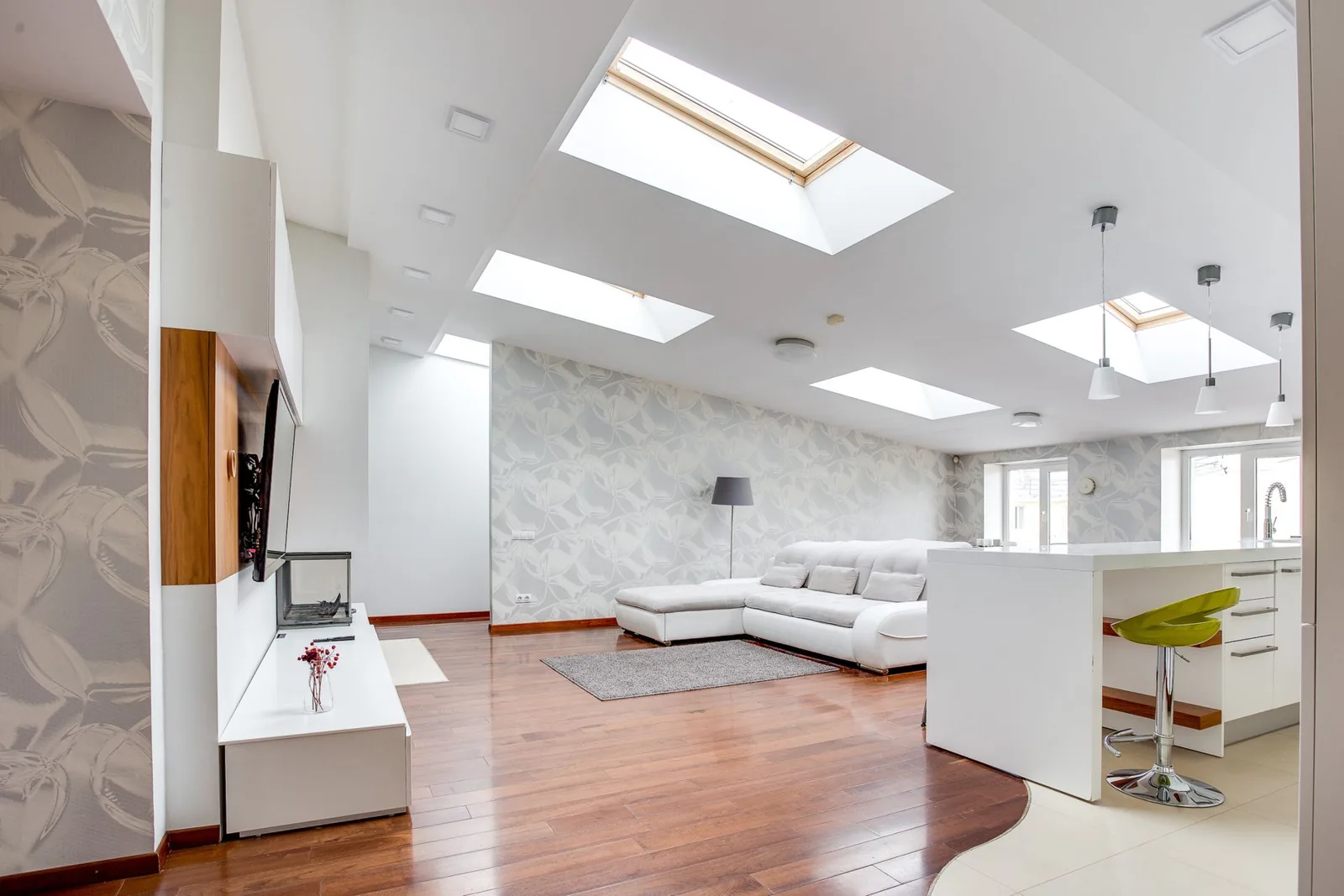
Photo by Алан Албегов via Pexels
Additional Costs Homeowners Overlook
Beyond the unit and the cut, these line items trip up first-time buyers and quietly inflate the final bill.
Permits and Inspection
Most municipalities require a building permit for a skylight because the job touches the roof structure and the building envelope. Permit fees run $100 to $500, and some jurisdictions require a follow-up inspection. Your contractor usually rolls this into a flat fee, but confirm it is itemized so you are not paying for it twice.
Flashing and Underlayment
A skylight is only as good as its flashing. Proper step flashing and a waterproof membrane add $150 to $400 in materials even though they never show up on a showroom invoice. Never cut this line item — cheap or missing flashing is the single most common cause of skylight leaks.
Skylight Blinds and Shades
Interior blinds for glare control and heat management run $150 to $700 per skylight. Velux’s own line of solar-powered, room-darkening, or light-filtering blinds is the most popular add-on, and it installs cleanly into the skylight’s frame with no exposed cords.
Glass Upgrades
High-efficiency, low-E, and impact-rated glass can add $100 to $500 per unit but pays back in lower cooling bills over the life of the skylight. For homes in the South and Southwest, gas-filled low-E glass is an upgrade worth taking.
DIY vs. Hiring a Pro
Installing a skylight is one of the more demanding DIY projects a homeowner can attempt, and most experts — including the team at This Old House — recommend hiring a licensed roofer. The cut must be structurally sound, the flashing must be perfectly sealed, and a botched job leaks into the roof deck, insulation, and ceiling below.
A DIY fixed skylight kit can be had for $400 to $900, which sounds tempting next to a $2,800 professional quote. But roof leaks caused by improper installation routinely cost more to repair than the original install, and most skylight warranties are void unless a certified contractor does the work. If you do go the DIY route, stick to a tubular kit or a curb-mounted unit replacing an old skylight of the same size — never a first-time framed cut on a steep, shingled roof.
Is a Skylight Worth the Investment?
A skylight rarely pays for itself the way a replacement roof or new windows do, but it delivers value that does not show up on a spreadsheet: brighter rooms, lower daytime lighting use, and — for vented models — free passive ventilation. The U.S. Department of Energy notes that properly placed and sized skylights can cut both lighting and heating costs, especially in colder climates where south-facing units add useful solar heat gain in winter.
In curb-appeal terms, a well-installed skylight can recoup roughly 50% to 70% of its cost at resale, according to remodeling cost surveys. Combined with the everyday quality-of-life benefit, most homeowners who want one rate it as money well spent.
Frequently Asked Questions
How much does it cost to install a skylight?
Most homeowners pay between $1,600 and $5,000 for a professionally installed skylight, with a national average around $2,700. Fixed units sit at the low end of the range and motorized vented units at the high end.
Can you install a skylight yourself?
It is possible, but generally not recommended. The cut, structural framing, and waterproof flashing are difficult to get right on a first attempt, and most warranties require a certified installer. Tubular kits are the most DIY-friendly option.
How long does a skylight installation take?
An experienced two-person crew usually completes a single skylight in four to eight hours. Steep roofs, tile or metal roofing, and rafter modifications can stretch the job to a full day or more.
Do skylights leak?
A properly flashed and installed skylight should not leak. Most leaks trace back to worn flashing, failed seals on aging units, or poor installation — which is why labor and flashing quality matter just as much as the skylight itself.
Are skylights eligible for rebates or tax credits?
Some ENERGY STAR-certified skylights qualify for utility rebates and, in limited cases, state or federal incentives for energy-efficient home improvements. Check with your local utility and ENERGY STAR before you buy.
The Bottom Line
Skylight installation cost ultimately comes down to three decisions: fixed versus vented, small versus large, and simple versus complicated roof access. Budget $1,600 to $5,000 as a realistic range, get itemized quotes from at least three licensed roofers, and never let flashing be the line item you cut. A well-installed skylight adds light, comfort, and value for decades — a leaky one adds a headache you will be chasing for years.
If you are already planning window work, a skylight often pairs naturally with a full window replacement or a switch to energy-efficient windows. And if entry projects are on your list at the same time, weigh your skylight budget against the going rate for a front door replacement so your renovation dollars go the farthest. Request your three quotes today, and you will know your real number by the end of the week.