Backyard Fire Pit Ideas: 12 Designs, Costs, and Safety Tips
A fire pit turns a plain backyard into the place everyone drifts toward after dinner. Whether you want a simple weekend project or a built-in focal point, there are more backyard fire pit ideas than most homeowners realize — and they range from a $60 DIY paver ring to a $6,000 custom gas installation. The right choice comes down to how you plan to use it, what your yard can handle, and how much you want to spend.
This guide walks through twelve practical designs across budget, fuel type, and material, then breaks down real costs, safety rules, and the mistakes that most often trip people up. By the end, you should know exactly which option fits your space and your budget.
What Makes a Great Backyard Fire Pit?
Before shopping, it helps to know the three decisions that shape every project: fuel, material, and placement. Get those right and almost any design will work. Get one wrong and you end up with a feature that smokes out your patio or sits unused in a corner.
- Fuel — wood, propane, or natural gas. Wood gives you crackle and smoke (and mess); gas gives you a clean flame at the flip of a switch.
- Material — steel, cast iron, concrete block, stone, or prefab composite. Each handles heat differently and costs sit on a wide spectrum.
- Placement — at least 10 to 20 feet from structures and overhangs, on a level, non-combustible surface.
Nail those three and the design is mostly a matter of taste. The ideas below are grouped so you can skim to the style that fits your yard.
Backyard Fire Pit Ideas by Style
Here are twelve concrete options, from throw-it-together weekend builds to permanent masonry features.
Low-Budget and DIY
- Paver-ring fire pit. A circle of concrete retaining-wall blocks set directly on level ground. No mortar, no foundation — two hours of work and $60 to $150 in materials. This is the classic first-timer build and still one of the most practical backyard fire pit ideas going.
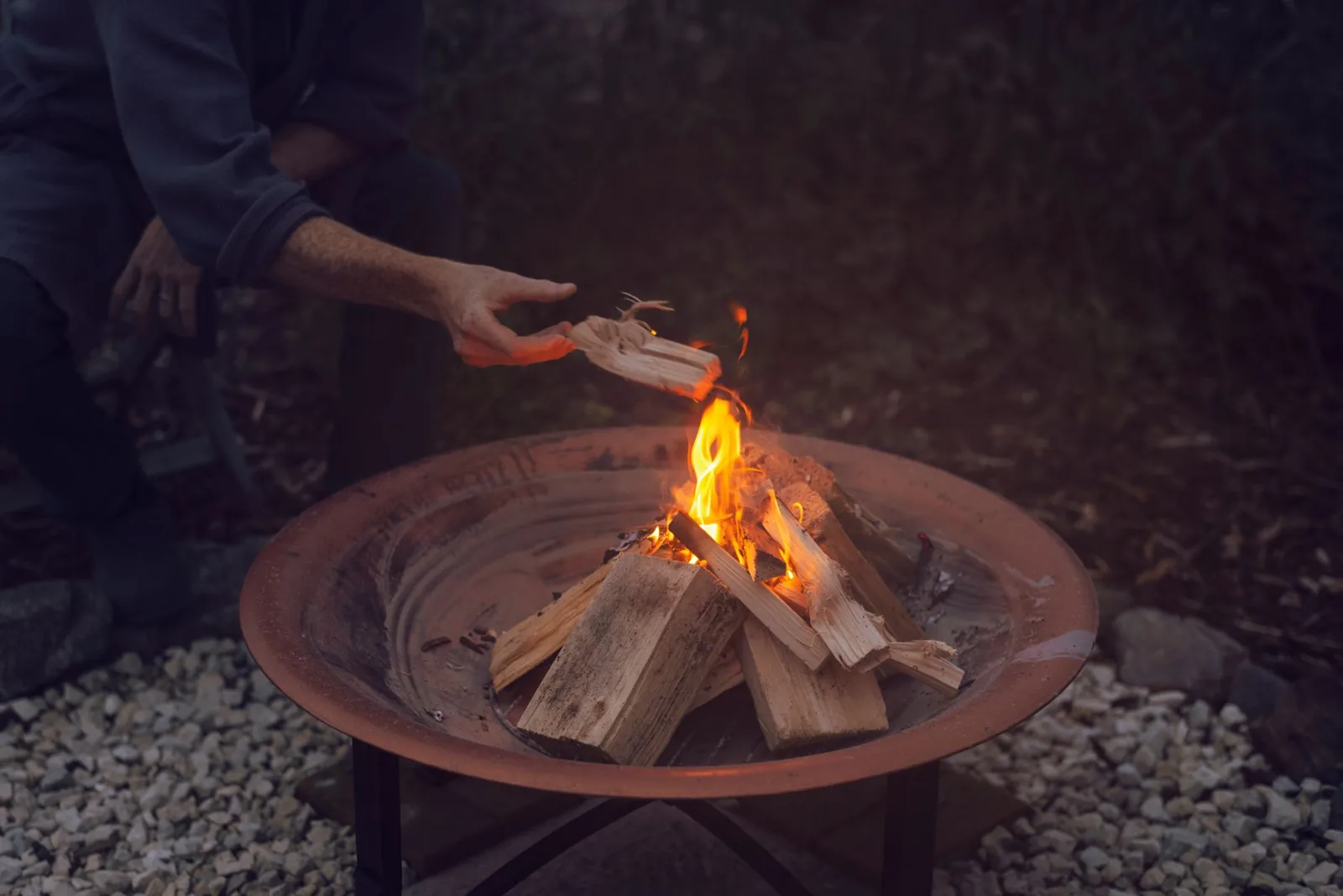
- Steel bowl on gravel. A $40 to $80 steel fire bowl placed on a 4-inch bed of crushed gravel. Add a ring of landscape rocks around it and you have a clean look for under $150 total. The gravel doubles as a spark buffer.
- Repurposed washing-machine drum. An old stainless drum makes a surprisingly good portable fire pit because it already has ventilation holes. Free (or nearly so) and rust-resistant, though the industrial look isn’t for everyone.
- Rocks-and-sand pit. Dig a shallow depression, line it with sand, and edge it with large stones. It costs almost nothing and looks natural, but loose stones are not fire-rated and can crack or pop when hot — keep fires modest if you go this route.
Mid-Range Prefab and Semi-Custom
- Powder-coated steel fire pit. The $150 to $400 bowls and spheres you see at big-box stores, often with a spark screen and poker included. Look for one with a rain cover and wheels. They’re portable, which matters if your HOA or climate limits permanent structures.
- Cast-iron chiminea. A wood-burning chiminea throws heat in one direction, which makes it great for seating that faces one way. Expect $200 to $600. The trade-off is a smaller viewing angle for the flame than an open bowl.
- Block fire pit with capstones. A squared or circular pit built from concrete blocks and finished with a flat capstone lip — a step up from the paver ring. You’ll spend $300 to $700 on materials and a weekend on the build, and you get a permanent, heavy feature.
- Propane fire table. A gas fire table runs $400 to $2,500 and doubles as a coffee table when the flame is off. No smoke, no firewood, and it lights with a push button. The catch is a refillable propane tank that usually hides underneath or off to one side.
High-End and Built-In
- Natural stone fire pit. Fieldstone or flagstone stacked and mortared into a permanent ring, often with a matching bench. Price depends heavily on stone and labor, but budget $1,500 to $4,000 for a pro-built feature.
- Gas fire pit with glass media. A natural-gas or propane burner topped with fire glass or ceramic logs. Clean, modern, and near-zero maintenance, but expect $2,000 to $6,000 installed if you need a gas line run.
- Sunken conversation pit. A recessed seating area with a fire pit at the center — a real architectural statement. This is a landscape-grade project with drainage and retaining walls, so think $8,000 and up.
- Fire pit island with a cooking grate. A larger masonry pit with a swing-away grill grate, turning your fire pit into an outdoor cook station. Add a ring of gravel or pavers around it and it anchors the whole yard.
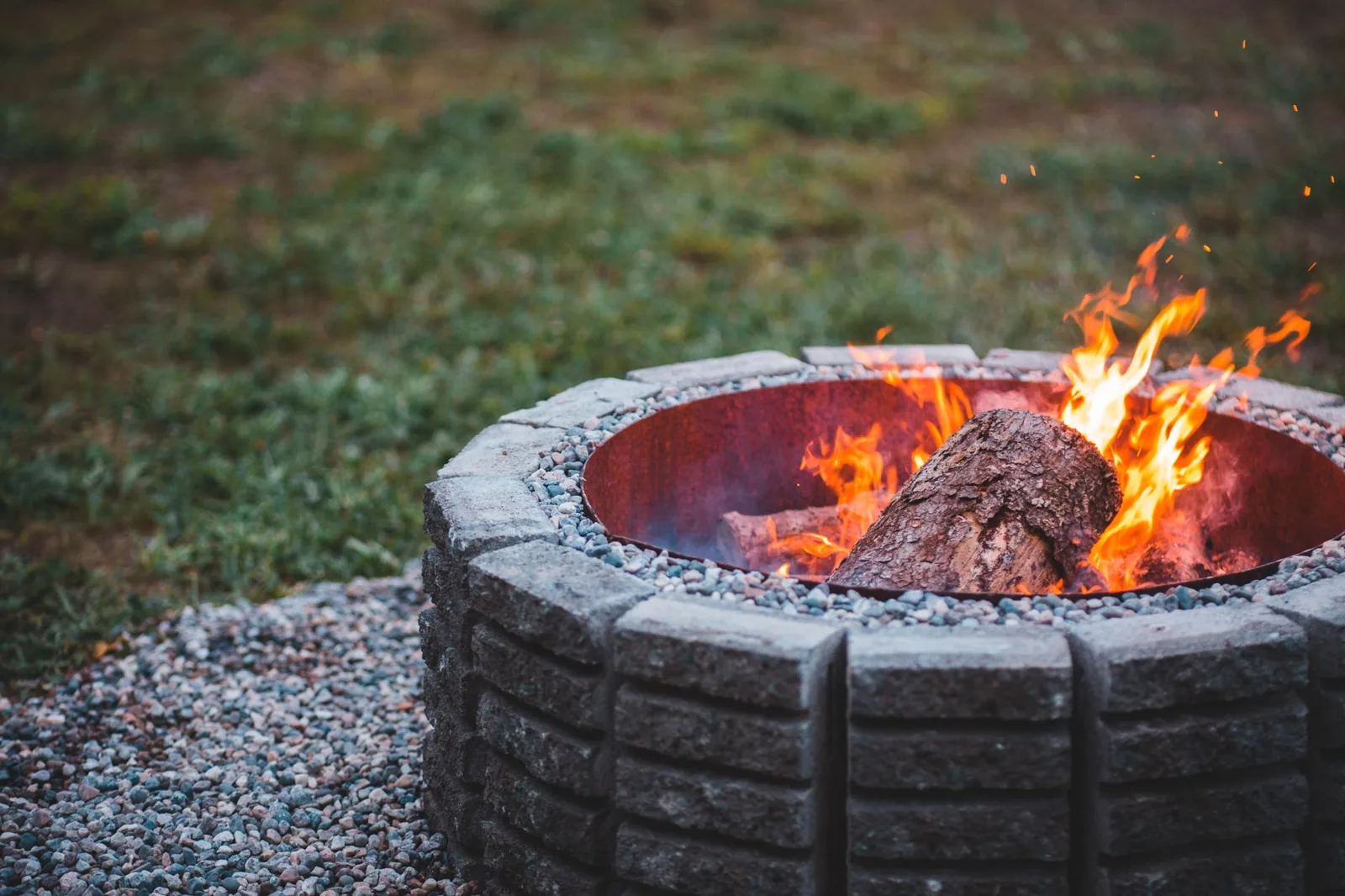
Photo by Erik Mclean via Pexels
Fire Pit Materials Compared
The material you pick drives cost, appearance, and how the pit ages. The table below lines up the four most common choices so you can weigh them side by side.
| Feature | Steel | Concrete block | Stone | Cast iron |
|---|---|---|---|---|
| Typical cost | $40–$400 | $150–$700 | $1,500–$4,000 | $200–$600 |
| Heat handling | Good, but thin steel rusts | Good | Excellent | Excellent |
| Lifespan | 3–10 years | 10+ years if built right | Decades | Decades with care |
| Portability | High | Low | None | Medium |
| Best for | Renters, budget buyers | DIY builders | Permanent designer looks | Directional heat |
Rust is the theme of the steel column: a $60 bowl left in the rain will be flaky within two seasons, which is why a $20 rain cover is the cheapest insurance you can buy. Stone and cast iron are the “buy once” materials — heavy, durable, and significantly more expensive up front.
Where Material Meets Fuel
One more factor: wood fires burn hot with open flame, so the inside of the pit must be rated for that heat. Gas burners stay cooler at the surface but need the right burner pan and media, which is why most gas setups come as a complete kit rather than a DIY stack of blocks.
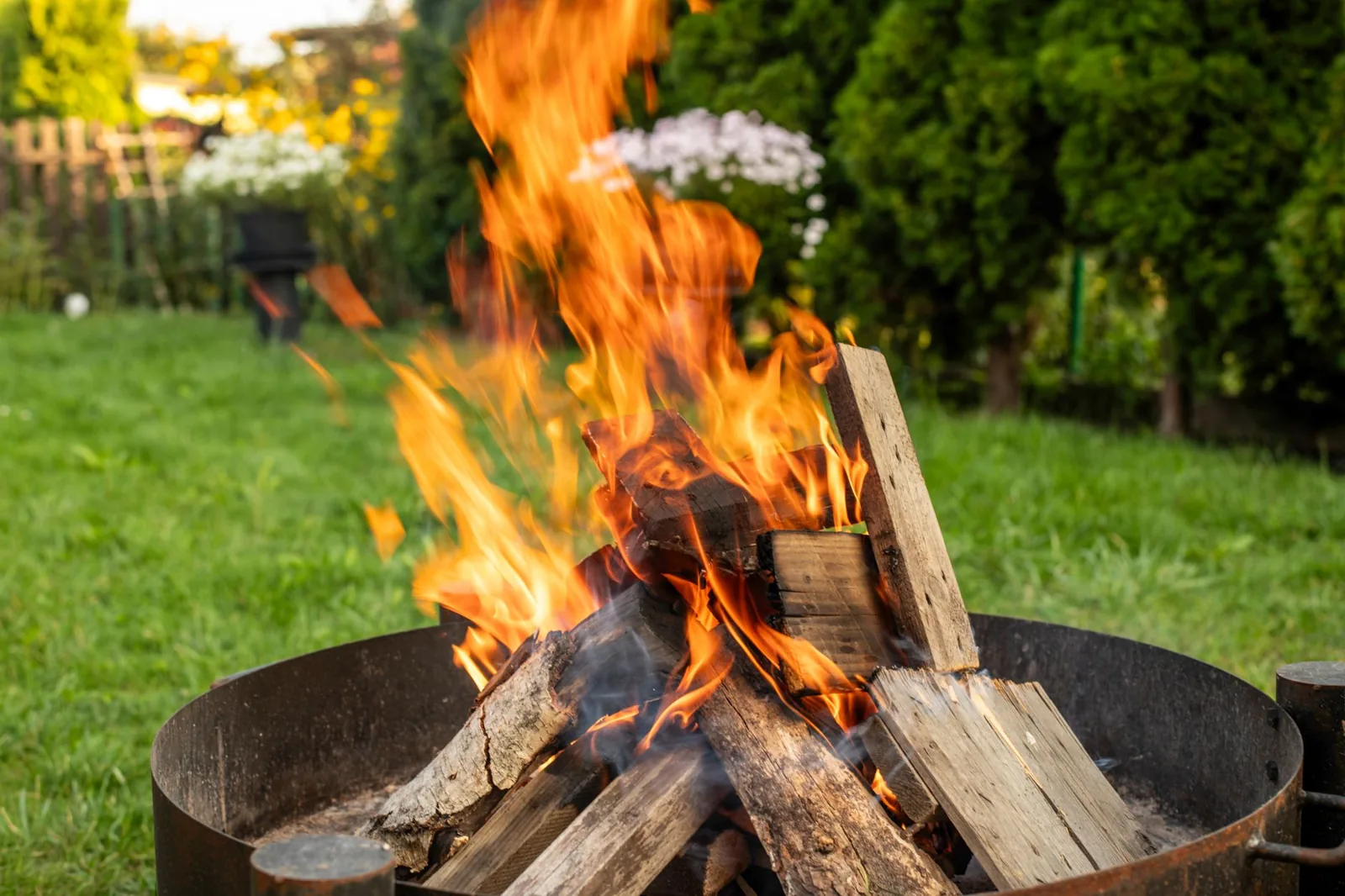
Photo by Krzysztof Jaworski Fotografia Toruń via Pexels
What a Fire Pit Really Costs
Plan for the pit itself, then everything around it. Many people budget for the bowl and forget the base, the fuel, and the finishing touches.
- The pit. $60 to $600 for steel and prefab units; $300 to $700 in materials for a block build; $1,500 to $6,000 for stone or gas with installation.
- The base. A level gravel or paver pad runs $2 to $6 per square foot, or about $150 to $400 for a typical 8-by-8-foot fire pit zone.
- Fuel. A face cord of seasoned firewood costs $50 to $120 and lasts a season or two of casual use. A propane tank refill runs $15 to $25 and lasts roughly 8 to 10 hours of burn time.
- Extras. Seating (Adirondack chairs, $60 to $150 each), a spark screen, lighting, and a cover add another $200 to $600 for most setups.
Labor is where the budget blows up. A handyman might charge $500 to $1,500 to build a simple block or paver pit, while a licensed contractor running a gas line adds $1,000 to $3,000 on its own. If you can stack blocks and level gravel, the DIY path saves real money — which is exactly why the paver-ring build remains popular.
Wood vs. Propane vs. Natural Gas
Fuel changes the whole experience, not just the smell. Here’s how the three stack up for a typical backyard.
- Wood. Best flame and the only option for true ambiance (crackle, smoke, that campfire smell). Downsides are smoke, ash cleanup, and local burn bans during dry spells. You’ll also want seasoning time for green wood.
- Propane. Clean, instant, and portable, but the tank is the weak point — you’ll notice it runs out mid-evening right when everyone’s outside. Great for fire tables and smaller yards.
- Natural gas. The permanent option. A plumbed line means no tanks ever, but installation ties you to one spot and adds the highest upfront cost. Best suited to built-in stone or fire-table designs.
For most first-time buyers with a normal suburban yard, a steel wood-burning bowl is the low-risk start. If your yard is small or you hate smoke, a propane fire table is the cleaner bet. Natural gas makes sense when you’re already building a covered patio or kitchen space where a line can be run alongside other utilities.
Safety, Placement, and the Rules People Skip
A fire pit is the one backyard feature that can genuinely hurt you or your house, so the checklist matters more than the design.
- Keep the pit at least 10 feet from any structure, fence, or tree overhang — 20 to 25 feet is safer in windy areas.
- Place it on a level, non-combustible surface. Never set a wood fire directly on a wood deck; a fire pad or pavers under a bowl on a deck is the minimum, and a separate gravel pad is better.
- Check local codes and burn bans. Some cities cap fire pit size or forbid open burning entirely; check before you spend. Family Handyman keeps a straightforward guide to fire pit safety rules covering the basics.
- Keep a garden hose, bucket of sand, or fire extinguisher within reach, and never leave a fire unattended, especially with kids or pets around.
- Wind and smoke — face the prevailing breeze away from seating, and warn neighbors if you’re in a tight community; smoke complaints are a fast way to get a pit banned.
Placement also affects how often you use it. A pit tucked at the far end of the yard gets visited once a year; a pit you can see from the kitchen window gets used weekly. Build it where you already like to sit and it earns its keep.
Frequently Asked Questions
How far should a fire pit be from the house?
At least 10 feet, and 20 to 25 feet is better. The exact rule varies by city and insurance policy, so check both before you build or buy.
Are backyard fire pits worth the money?
For most homeowners, yes. They run about $150 to $600 for a solid entry-level setup, extend the outdoor season by weeks in cooler climates, and are a consistent resale and hosting feature — without the much higher cost of a full outdoor kitchen.
What is the cheapest way to build a fire pit?
A paver or retaining-block ring on level ground with a gravel base — $60 to $150 in materials and an afternoon of work. A steel bowl on gravel is cheaper still if you don’t mind the look.
Do fire pits increase home value?
They can add appeal more than hard dollars. A well-placed built-in stone or gas fire pit is a selling point, but most experts put a hard-value boost in the low single-digit percentage range, and only when it’s permanent and well maintained.
Which lasts longer, wood or gas fire pits?
It depends on the material, not the fuel. A cast-iron or stone pit lasts decades on either fuel; a thin steel bowl rusts in a few years no matter what you burn. Gas kits have burner components that may need replacement every several years.
The Bottom Line
The best backyard fire pit is the one you’ll actually use, and that usually means matching the design to how you live. A $60 paver ring on a gravel pad serves a family that wants weekend fires as well as a $4,000 stone feature — the difference is pure looks and permanence.
If you want the fastest, cheapest win: buy a steel bowl, drop it on a gravel pad, and add two chairs. If you want a permanent focal point: build a block or stone pit with a capstone, or go gas with a fire table if smoke and cleanup would keep you off the patio. Either way, keep it 10-plus feet from the house, stock a hose nearby, and check local rules first.
Once your fire pit is in, it tends to anchor the rest of the yard — which is why it pairs so well with a pergola overhead or a deck or patio that’s worth the comparison. And if you’re already running a gas line, ask your contractor about bundling it with an outdoor kitchen build — the plumbing is the expensive part, and running it once covers both.